
SERPView
SERPView unlocks hidden Google Search Console data for superior SEO insights and performance.
VisitPublished on:
June 17, 2025
About SERPView
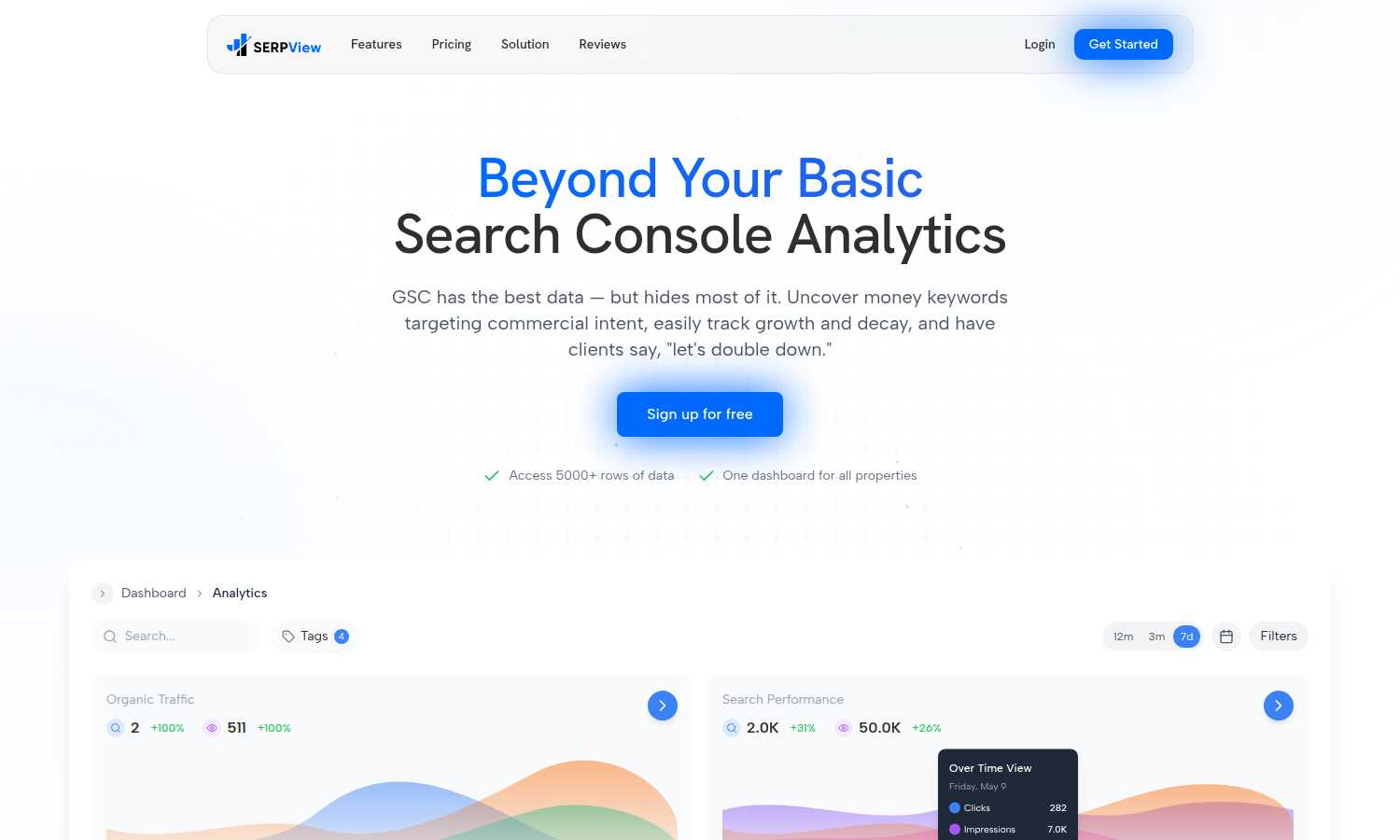
SERPView is an enterprise-grade SEO analytics platform engineered to unlock the full potential of Google Search Console data for digital marketing teams, SEO agencies, and business owners. It directly addresses the critical limitations of the native Google Search Console interface, which restricts data access to 1,000 rows and fragments insights across disparate properties. By providing seamless access to over 50,000 rows of performance data, SERPView transforms raw search metrics into a centralized, actionable command center. The platform is designed for professionals who require depth, scalability, and clarity in their SEO reporting to drive strategic decisions. Its core value proposition lies in elevating productivity and ROI by eliminating manual data aggregation, revealing hidden keyword and content opportunities, and enabling precise tracking of performance against business goals. With SERPView, organizations can consolidate all their GSC properties into a single dashboard, apply advanced filters and tags, and gain longitudinal insights that are simply inaccessible through standard tools, ensuring no valuable signal is lost and every optimization is data-informed.
Features of SERPView
Unrestricted Performance Tracking
SERPView provides unrestricted access to over 50,000 rows of Google Search Console data, shattering the native 1,000-row limit. This allows for comprehensive tracking of clicks, impressions, CTR, and average position across your entire keyword portfolio. Enterprise teams can analyze complete datasets to identify granular trends, measure campaign impact with precision, and make decisions based on a full picture of search performance, eliminating the guesswork caused by data sampling.
Advanced Keyword & Page Analysis
Go beyond surface-level metrics to uncover high-intent commercial keywords and top-performing pages. The platform enables deep-dive analysis into keyword ranking fluctuations over time and evaluates page-level performance to pinpoint both opportunities and underperforming assets. This feature directly supports content strategy refinement and resource allocation, ensuring efforts are focused on terms and pages with the highest potential for traffic and conversion growth.
Consolidated Multi-Property Dashboard
Manage all connected Google Search Console properties and websites from a single, unified interface. This eliminates the inefficiency of logging into multiple accounts and toggling between views. Teams can gain a holistic view of their entire domain portfolio's search health, compare performance across properties, and streamline reporting processes, significantly boosting operational efficiency and cross-team visibility.
Intelligent Topic Clustering & Device Analysis
SERPView intelligently groups keywords into topic clusters, allowing you to assess the performance of entire content themes and strategic pillars at a glance, rather than analyzing individual pages in isolation. Coupled with detailed mobile versus desktop performance breakdowns, this feature empowers strategic optimization for user intent and device-specific experience, a critical factor for modern SEO and user engagement metrics.
Use Cases of SERPView
Enterprise SEO Reporting & Agency Client Management
SEO agencies and in-house enterprise teams use SERPView to automate and scale client reporting. The ability to aggregate data from multiple properties into clean, insightful dashboards saves dozens of manual hours per month. Teams can provide clients with professional, data-rich reports that highlight progress, ROI, and strategic recommendations, enhancing client trust and demonstrating clear value from SEO investments.
Identifying High-Value Commercial Intent Keywords
Digital marketers leverage SERPView's deep keyword analysis to filter through thousands of search queries to identify those with clear commercial intent. By tracking position changes for these priority keywords, teams can focus link-building and content optimization efforts where they will have the most direct impact on lead generation and revenue, maximizing the return from their SEO activities.
Content Strategy Audits & Optimization
Content managers and strategists utilize the page analysis and topic clustering features to conduct thorough content audits. They can quickly identify top-performing pages to update and repurpose, as well as spot underperforming content that requires optimization or consolidation. This data-driven approach ensures content development is aligned with actual search demand and performance metrics.
Correlating Rankings with Algorithm Updates
SEO specialists use SERPView's annotation feature to mark Google's core algorithm updates and major site changes directly on performance charts. This allows for clear correlation analysis between ranking fluctuations and specific events, enabling faster diagnosis of traffic drops or gains and more informed strategic adjustments in response to search engine volatility.
Frequently Asked Questions
How does SERPView access more data than Google Search Console?
SERPView uses the official Google Search Console API to fetch and aggregate your website's search performance data. While the native GSC interface limits you to viewing 1,000 rows at a time for performance reasons, the API itself contains much more data. SERPView bypasses the UI limitation by systematically querying the API, collecting all available data (up to 50,000+ rows), and presenting it in a structured, analyzable format within its dashboard.
Can I connect multiple websites or GSC properties?
Yes, a core functionality of SERPView is the consolidation of multiple Google Search Console properties. You can connect numerous websites, domain properties, and URL prefix properties to a single SERPView account. All data is then accessible from one centralized dashboard, making it an ideal solution for agencies managing multiple clients or businesses with several domains or subdomains.
What is the benefit of tracking topic clusters?
Tracking individual keywords can be myopic. Topic clustering groups semantically related keywords together, allowing you to see how entire subject areas or content pillars are performing in search. This provides a strategic, high-level view of your content authority on specific topics, helps identify gaps in your coverage, and ensures your content strategy aligns with broader search themes rather than isolated terms.
How does the annotation feature for Google updates work?
SERPView maintains a timeline of confirmed Google algorithm updates (like Core Updates or helpful content updates). You can overlay these events on your performance charts. Additionally, you can add custom annotations for your own site events, such as a major redesign, CMS migration, or new content launch. This visual correlation helps you understand the cause behind significant ranking or traffic changes.
Similar to SERPView

Your Social Media Content Engine That Drives Revenue. Distribute your content to every social platform and track it in real time.

Built2WinWeb is a custom PHP development studio and AI-native infrastructure provider.


The #1 Native Form Builder Plugin for Framer - No Code, No Embeds, No External Platforms.


Where modern software products get discovered, launched, and distributed. Explore verified AI tools, SaaS startups, and developer software.

A GEO SEO platform for creating and publishing multilingual content optimized for AI search visibility.

AI SEO platform for keyword research, content briefs, writing, grading, optimization and publishing.