Fusedash vs qtrl.ai
Side-by-side comparison to help you choose the right AI tool.
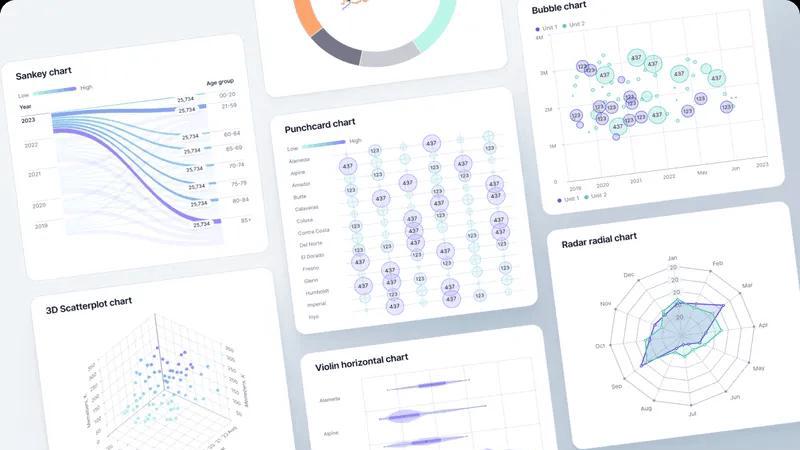
Fusedash transforms raw data into actionable dashboards and reports to accelerate team productivity.
Last updated: March 4, 2026
qtrl.ai
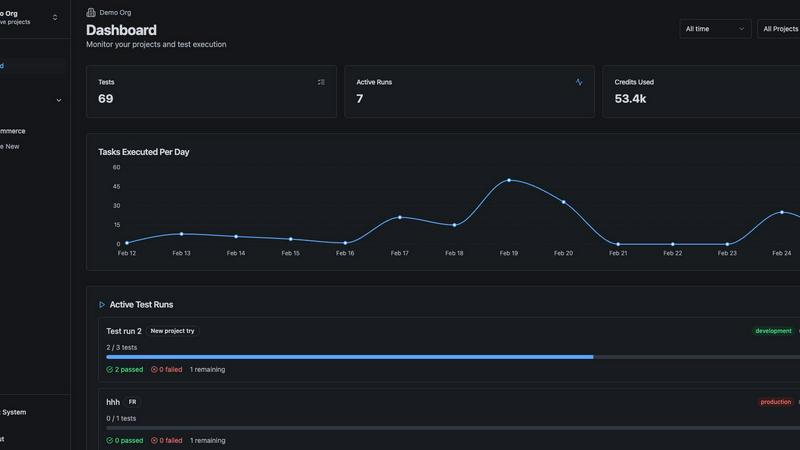
qtrl.ai scales QA with AI agents while ensuring full enterprise control and governance.
Last updated: March 4, 2026
Visual Comparison
Fusedash

qtrl.ai

Feature Comparison
Fusedash
Unified Data Visualization Workspace
Fusedash consolidates dashboards, charts, maps, and narrative reporting into a single, cohesive platform. This eliminates the need to toggle between disparate tools, ensuring that all visualizations are built from the same consistent dataset and metric definitions. Teams can customize layouts, filters, and time ranges for different audiences, reusing the same core structure to maintain data integrity while tailoring the view for executives, marketing, or operations, thereby streamlining the entire reporting workflow.
AI-Powered Chart Generation
This feature allows users to rapidly generate clear, accurate visualizations directly from CSVs or connected APIs. The AI assists in selecting the optimal chart type, applying relevant comparisons, and refining labels to ensure the visual correctly conveys the underlying story. These charts can be used as standalone assets for presentations or seamlessly embedded into broader dashboards, significantly accelerating the initial data exploration and report-building process for analysts and business users alike.
Consistent Metric & KPI Governance
Fusedash enables organizations to formally define and standardize key metrics, dimensions, and calculations in a central repository. Once established, these certified definitions are automatically applied across every dashboard, chart, and report. This governance layer eradicates conflicting data stories, builds trust in the numbers, and ensures that every department is making decisions based on the same validated performance indicators, which is critical for strategic alignment.
Natural Language AI Chat for Data Exploration
Integrated Smart Chat allows users to interact with their data using plain language queries. Users can ask questions about trends, request specific breakdowns by segment or region, and receive intelligent suggestions for relevant metrics or visualizations. This conversational interface lowers the barrier to data analysis, enabling non-technical stakeholders to derive insights independently and instantly transform those insights into shareable, persistent dashboard views.
qtrl.ai
Enterprise-Grade Test Management
qtrl provides a centralized hub for all quality assurance activities, offering structured test case management, planning, and execution tracking. It ensures full traceability from requirements to test coverage, creating clear audit trails essential for compliance-driven environments. Teams can manage both manual and automated workflows within a single platform, providing engineering leads and QA managers with unparalleled visibility into testing status, pass/fail rates, and potential risk areas through real-time, customizable dashboards.
Progressive AI Automation & Autonomous Agents
Unlike all-or-nothing AI solutions, qtrl introduces intelligent automation progressively. Teams begin with human-written test instructions. When ready, they can leverage built-in autonomous AI agents that generate executable UI tests from plain English descriptions, maintain them as the application evolves, and run them at scale. This feature allows for a controlled adoption curve, where AI suggestions are fully reviewable and approvable, ensuring teams never lose oversight while significantly accelerating test creation and maintenance.
Governance by Design & Permissioned Autonomy
qtrl is built with enterprise trust and security as foundational principles. It offers configurable autonomy levels, ensuring AI agents operate strictly within user-defined rules and permissions. The platform provides full visibility into every agent action, eliminating "black-box" decisions. With enterprise-ready security, encrypted secrets management, and the guarantee that secrets are never exposed to AI agents, qtrl delivers the governance required for sensitive and regulated industries.
Adaptive Memory & Multi-Environment Execution
The platform's Adaptive Memory system builds a living, evolving knowledge base of your application by learning from every exploration, test execution, and resolved issue. This powers context-aware, smarter test generation over time. Coupled with robust multi-environment execution capabilities, teams can run tests across development, staging, and production environments with per-environment variables, ensuring consistency and reliability throughout the CI/CD pipeline.
Use Cases
Fusedash
Executive Performance Reporting
Leadership teams utilize Fusedash to create consolidated executive dashboards that provide a real-time, high-level view of organizational health. By combining financial, operational, and customer metrics into a single narrative report with storytelling sections, executives gain immediate context on what changed, why it matters, and what actions are recommended, reducing time spent in lengthy briefing meetings and enabling faster, data-driven strategic decisions.
Marketing Campaign Analysis
Marketing departments leverage the platform to monitor campaign performance across multiple channels in real time. They can build interactive dashboards to track KPIs like CAC, ROAS, and engagement, use the AI chart generator for rapid creative or segment performance analysis, and drill down into geographic data on maps to assess regional effectiveness. This unified view prevents data fragmentation between platforms and accelerates optimization cycles.
Operational Monitoring and Diagnostics
Operations and support teams use Fusedash for live monitoring of key processes and customer service metrics through real-time interfaces. When a KPI deviates, teams can immediately drill down into specific time periods, agent groups, or product lines to diagnose the root cause. This capability transforms monitoring from a passive alerting system into an active diagnostic tool, minimizing downtime and improving service quality.
Cross-Departmental Business Reviews
Fusedash serves as the central platform for quarterly and monthly business reviews (QBRs/MBRs). Instead of compiling conflicting slides from various departments, teams share a single, interactive Fusedash report. Each department can have its own filtered view within the same dataset, ensuring all discussions are based on consistent numbers, which streamlines preparation, enhances meeting productivity, and drives collective accountability.
qtrl.ai
Scaling QA Beyond Manual Testing
For teams overwhelmed by repetitive manual test cycles, qtrl provides a structured path to automation. Teams can start by documenting manual test cases in the platform, then progressively use AI agents to automate the most time-consuming scripts. This use case directly translates to a measurable ROI by freeing QA personnel for higher-value exploratory testing and reducing time-to-market for new features without a steep initial learning curve.
Modernizing Legacy QA Workflows
Organizations reliant on outdated, siloed, or script-heavy automation frameworks can use qtrl to consolidate and modernize their entire QA process. The platform integrates with existing tools and requirements management systems, bringing test management, automation, and execution into a single, governed environment. This streamlines workflows, reduces maintenance costs of brittle scripts, and establishes a scalable foundation for continuous quality improvement.
Ensuring Governance in Regulated Enterprises
For enterprises in finance, healthcare, or government requiring strict compliance, audit trails, and change control, qtrl's governance-by-design approach is critical. The platform ensures full traceability for every requirement, test, and result, with permissioned autonomy that keeps AI actions accountable. This use case enables these organizations to leverage AI for productivity gains while fully meeting internal and external regulatory audit requirements.
Empowering Product-Led Engineering Teams
Product-led growth teams that deploy frequently need rapid, reliable quality feedback. qtrl integrates seamlessly into CI/CD pipelines, providing continuous quality feedback loops. Autonomous agents can be triggered on-demand to validate new builds or user journeys, ensuring that rapid iteration does not compromise software quality. This accelerates release velocity while providing engineering leads with confidence in each deployment.
Overview
About Fusedash
Fusedash is an enterprise-grade AI data visualization platform engineered to eliminate data silos and reporting inefficiencies that plague modern organizations. It provides a unified workspace where teams can transform raw, connected data from disparate sources into a single source of truth. The platform empowers users to create decision-ready dashboards, interactive charts, detailed maps, and narrative reports without the need to rebuild core logic across multiple, disconnected tools. Its foundational value proposition is consistency and operational efficiency: key metrics and KPIs are defined once and then reused across every view and report, ensuring alignment from leadership to frontline operations. Built for teams burdened by manual reporting cycles and conflicting data narratives, Fusedash not only enables real-time performance monitoring but also facilitates deep diagnostic analysis through intuitive drill-downs. Integrated AI capabilities, including natural language data chat and smart visualization assistance, democratize data exploration, making it faster and more accessible. By turning complex datasets into clear, actionable insights, Fusedash drives organizational alignment, accelerates decision-making, and delivers measurable ROI by drastically reducing the time spent on data wrangling and report generation.
About qtrl.ai
qtrl.ai is an enterprise-grade AI-powered QA platform engineered to help software development teams scale their quality assurance operations while maintaining rigorous control and governance. It addresses the critical industry dilemma of choosing between the slow, unscalable nature of manual testing and the brittle, high-maintenance complexity of traditional test automation. qtrl provides a unified solution by combining robust, centralized test management with a progressive, trustworthy layer of AI automation. This platform serves as a single source of truth for organizing test cases, planning test runs, tracing requirements to coverage, and tracking real-time quality metrics through comprehensive dashboards. Its core value proposition is delivering a trusted path to faster release cycles and higher-quality software, making it ideal for product-led engineering teams, QA groups transitioning from manual processes, organizations modernizing legacy workflows, and enterprises with strict compliance and auditability requirements. qtrl's mission is to bridge the gap between control and speed, enabling teams to incrementally adopt intelligent automation without the risks associated with opaque, "black-box" AI solutions.
Frequently Asked Questions
Fusedash FAQ
What types of data sources can I connect to Fusedash?
Fusedash offers flexible data integration capabilities designed for enterprise environments. You can start by uploading CSV files for quick analysis or connect directly to live data sources via API integrations, including databases, CRM platforms, marketing tools, and financial systems. The platform also allows you to combine multiple datasets into a single unified view and enrich your analysis with relevant public data, ensuring a comprehensive analytical foundation.
How does Fusedash ensure data consistency across different reports?
Consistency is a core architectural principle of Fusedash. The platform allows you to centrally define and manage your key metrics, dimensions, and calculation formulas. Once these "single sources of truth" are established, they are automatically applied to every dashboard, chart, and report built within the workspace. This governance model eliminates manual errors and definitional drift, guaranteeing that all teams across the organization are analyzing and reporting from the same trusted dataset.
Is the AI Chat feature suitable for non-technical business users?
Absolutely. The AI Chat (Smart Chat) feature is specifically designed to democratize data access. Users can ask questions about their data using natural, plain language—for example, "What were sales in the Northwest region last quarter?" or "Show me a breakdown of customer churn by product line." The AI interprets these queries, generates the appropriate analysis or visualization, and allows users to instantly save the results as a new view, making advanced analytics accessible without requiring SQL or technical expertise.
Can I use Fusedash for both real-time monitoring and static reporting?
Yes, Fusedash is built to support the full spectrum of data consumption needs. You can create real-time interfaces that refresh automatically to monitor live KPIs, such as website traffic or support ticket volume. Simultaneously, you can use the same connected data to build polished, narrative-driven reports for leadership, complete with storytelling context. This dual functionality ensures you have one platform for both operational vigilance and strategic communication.
qtrl.ai FAQ
How does qtrl.ai ensure the AI doesn't make unpredictable changes?
qtrl is built on a principle of "permissioned autonomy." AI agents do not make changes autonomously; they operate within strictly defined rules and levels of access set by the team. All AI-generated tests or modifications are presented as suggestions for human review and approval. This governance layer, combined with full visibility into every agent action, ensures predictability and maintains human-in-the-loop control at all times.
Can qtrl.ai integrate with our existing development and project management tools?
Yes, qtrl is designed for real-world workflows and offers built-in integrations for seamless operation within your existing tech stack. It supports requirements management integration, CI/CD pipeline tools, and other essential development software. This allows teams to maintain their current processes while centralizing and enhancing their QA activities within the qtrl platform, avoiding disruptive changes to established workflows.
Is qtrl.ai suitable for teams with no prior test automation experience?
Absolutely. qtrl is specifically designed for progressive adoption, making it an ideal starting point for teams new to automation. You can begin by using the platform solely for manual test management and collaboration. As the team becomes comfortable, you can leverage features like AI test generation from plain English, which lowers the technical barrier to entry and allows you to scale automation efforts at your own pace.
How does qtrl.ai handle sensitive data and security during testing?
Security is a cornerstone of qtrl's enterprise design. The platform supports per-environment variables and encrypted secrets for managing sensitive data like credentials and API keys. Crucially, these secrets are never exposed to the AI agents during test execution. qtrl also adheres to enterprise-grade security standards and offers detailed data processing agreements, making it a trustworthy choice for organizations with stringent security and privacy requirements.
Alternatives
Fusedash Alternatives
Fusedash is an AI-powered business intelligence and data visualization platform. It consolidates disparate data sources into a unified workspace, enabling teams to build consistent, decision-ready dashboards and reports. The platform's core strength lies in creating a single source of truth, eliminating manual reporting cycles and conflicting data narratives across departments. Organizations may seek alternatives to Fusedash for various strategic reasons. Common drivers include specific budget constraints, the need for deeper integration with an existing enterprise tech stack, or requirements for highly specialized analytical functions not covered by a generalist platform. Evaluating the total cost of ownership and long-term scalability is also a frequent consideration. When assessing other solutions, key criteria should include the ability to maintain consistent metric definitions, support for real-time data exploration, and the overall efficiency gained in report creation and distribution. The ideal platform reduces time-to-insight, empowers non-technical users with self-service analytics, and provides robust security to protect sensitive business data.
qtrl.ai Alternatives
qtrl.ai is a modern QA and test automation platform designed for software engineering teams. It combines structured test management with intelligent AI agents to help teams scale their testing efforts while maintaining full governance and control over the process. This positions it within the broader categories of test automation and developer tools. Users often evaluate alternatives for several strategic reasons. These can include budget constraints, the need for specific niche features not covered by a general platform, or integration requirements with an existing toolchain. Some organizations may also prioritize different aspects, such as a heavier focus on open-source frameworks or a desire for a more developer-centric coding environment over a managed platform. When assessing alternatives, key considerations should align with core business objectives. Evaluate the total cost of ownership, not just licensing fees. Scrutinize the platform's approach to AI—whether it's transparent and governable or a black box. Finally, ensure it provides the necessary enterprise capabilities for security, compliance, and seamless integration into your development lifecycle to truly accelerate release velocity without introducing risk.