
fnel vs Fusedash
Side-by-side comparison to help you choose the right AI tool.

Fnel provides real-time funnel analytics for solo founders to instantly track and optimize user conversion rates.
Last updated: March 1, 2026

Fusedash transforms raw data into actionable dashboards and reports to accelerate team productivity.
Last updated: March 4, 2026
Visual Comparison
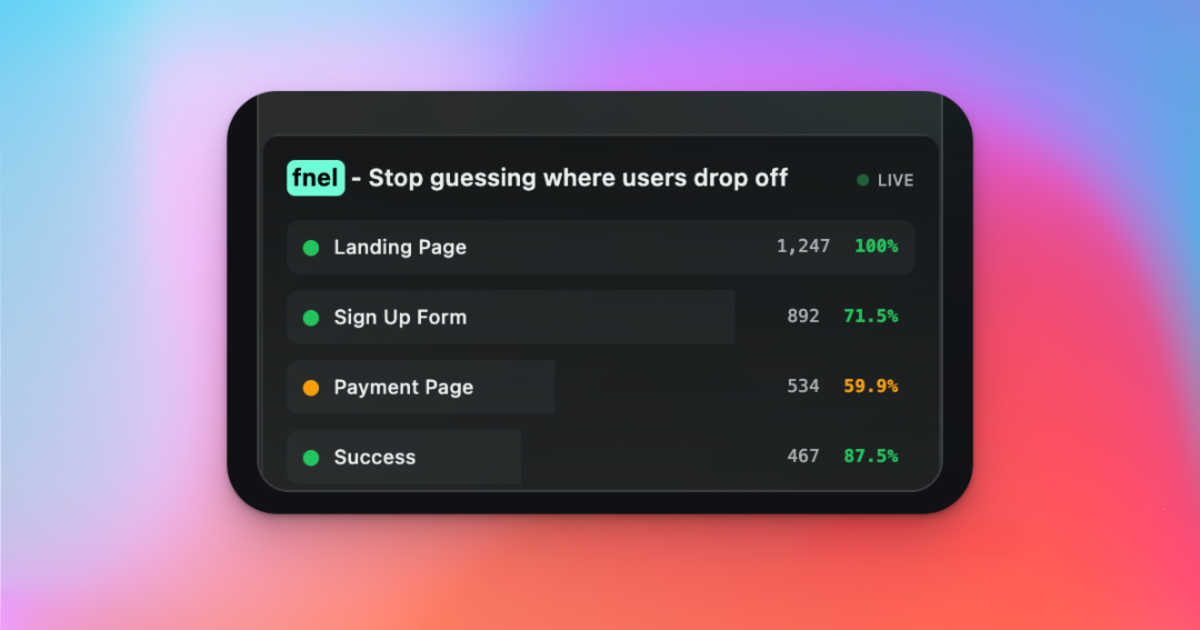
fnel
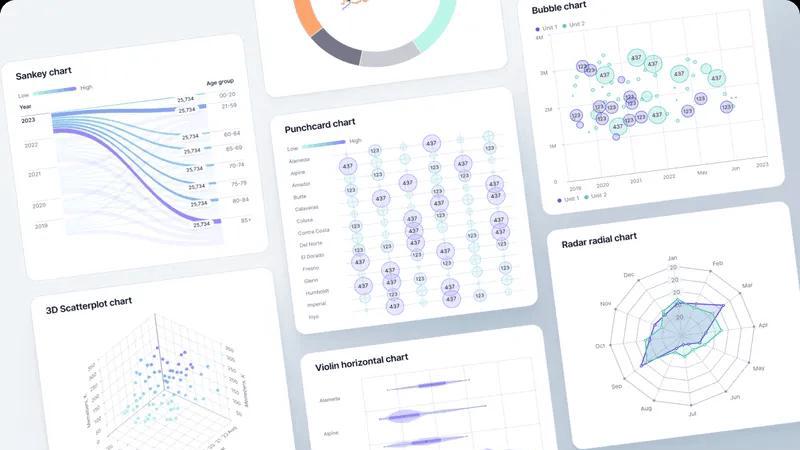
Fusedash
Feature Comparison
fnel
One-Line Setup
fnel requires only a single snippet to be added to your application. This rapid setup allows users to start tracking funnel events within minutes, eliminating the need for extensive configuration and enabling immediate access to real-time analytics.
Real-Time Funnel Tracking
With fnel, users can visualize their conversion funnels in real-time. This feature allows founders to monitor critical metrics at each step of the process, from landing page visits to successful conversions, ensuring they can quickly identify and address any drop-offs.
Smart Drop-off Alerts
fnel automatically detects when a step in the funnel suddenly underperforms. This proactive alert system helps founders react quickly to significant changes in user behavior, enabling them to fix conversion leaks before they impact overall performance.
A/B Test Validation
The platform allows users to run A/B tests effectively, comparing variants based on step-level conversion rates. This feature enables founders to make data-driven decisions by understanding which design or content variations yield the best results in real-world scenarios.
Fusedash
Unified Data Visualization Workspace
Fusedash consolidates dashboards, charts, maps, and narrative reporting into a single, cohesive platform. This eliminates the need to toggle between disparate tools, ensuring that all visualizations are built from the same consistent dataset and metric definitions. Teams can customize layouts, filters, and time ranges for different audiences, reusing the same core structure to maintain data integrity while tailoring the view for executives, marketing, or operations, thereby streamlining the entire reporting workflow.
AI-Powered Chart Generation
This feature allows users to rapidly generate clear, accurate visualizations directly from CSVs or connected APIs. The AI assists in selecting the optimal chart type, applying relevant comparisons, and refining labels to ensure the visual correctly conveys the underlying story. These charts can be used as standalone assets for presentations or seamlessly embedded into broader dashboards, significantly accelerating the initial data exploration and report-building process for analysts and business users alike.
Consistent Metric & KPI Governance
Fusedash enables organizations to formally define and standardize key metrics, dimensions, and calculations in a central repository. Once established, these certified definitions are automatically applied across every dashboard, chart, and report. This governance layer eradicates conflicting data stories, builds trust in the numbers, and ensures that every department is making decisions based on the same validated performance indicators, which is critical for strategic alignment.
Natural Language AI Chat for Data Exploration
Integrated Smart Chat allows users to interact with their data using plain language queries. Users can ask questions about trends, request specific breakdowns by segment or region, and receive intelligent suggestions for relevant metrics or visualizations. This conversational interface lowers the barrier to data analysis, enabling non-technical stakeholders to derive insights independently and instantly transform those insights into shareable, persistent dashboard views.
Use Cases
fnel
Optimizing SaaS Signup Flows
For SaaS founders, fnel provides the ability to track each step of the signup process, from landing page to onboarding. This visibility helps identify where users drop off, allowing for targeted optimizations that can significantly improve conversion rates.
Enhancing E-commerce Checkout Processes
E-commerce businesses can leverage fnel to analyze their checkout funnels. By visualizing the steps from cart to order placement, founders can quickly spot and fix leaks, leading to increased sales and improved customer satisfaction.
Validating Marketing Campaigns
Agencies and marketers can utilize fnel to track lead generation funnels, measuring the effectiveness of different campaigns. By understanding which campaigns drive qualified leads and conversions, they can optimize their marketing strategies for better ROI.
Improving User Onboarding Experiences
Founders can use fnel to analyze user onboarding flows, identifying bottlenecks or confusing steps that may impede new user engagement. This analysis facilitates the development of a more intuitive onboarding experience, ultimately leading to higher activation rates.
Fusedash
Executive Performance Reporting
Leadership teams utilize Fusedash to create consolidated executive dashboards that provide a real-time, high-level view of organizational health. By combining financial, operational, and customer metrics into a single narrative report with storytelling sections, executives gain immediate context on what changed, why it matters, and what actions are recommended, reducing time spent in lengthy briefing meetings and enabling faster, data-driven strategic decisions.
Marketing Campaign Analysis
Marketing departments leverage the platform to monitor campaign performance across multiple channels in real time. They can build interactive dashboards to track KPIs like CAC, ROAS, and engagement, use the AI chart generator for rapid creative or segment performance analysis, and drill down into geographic data on maps to assess regional effectiveness. This unified view prevents data fragmentation between platforms and accelerates optimization cycles.
Operational Monitoring and Diagnostics
Operations and support teams use Fusedash for live monitoring of key processes and customer service metrics through real-time interfaces. When a KPI deviates, teams can immediately drill down into specific time periods, agent groups, or product lines to diagnose the root cause. This capability transforms monitoring from a passive alerting system into an active diagnostic tool, minimizing downtime and improving service quality.
Cross-Departmental Business Reviews
Fusedash serves as the central platform for quarterly and monthly business reviews (QBRs/MBRs). Instead of compiling conflicting slides from various departments, teams share a single, interactive Fusedash report. Each department can have its own filtered view within the same dataset, ensuring all discussions are based on consistent numbers, which streamlines preparation, enhances meeting productivity, and drives collective accountability.
Overview
About fnel
fnel is an innovative funnel analytics tool crafted specifically for solo founders, indie hackers, and early-stage startups. Traditional analytics platforms often present significant challenges, including complex integrations and overwhelming dashboards that can hinder productivity. In contrast, fnel is designed to simplify the analytics process, enabling users to quickly identify where potential customers are dropping off within their conversion funnels. With just one line of code required for setup, users can start tracking events immediately, gaining critical insights into user behavior and funnel performance. This streamlined approach allows founders to optimize signups, onboarding, and overall conversion rates without enduring the steep learning curve typically associated with analytics tools. Whether you are validating a new startup idea, managing a side project, or scaling your first SaaS product, fnel delivers the clarity and actionable insights necessary for making informed decisions swiftly. Its lightweight, developer-friendly design empowers users to focus more on building their business rather than on configuration.
About Fusedash
Fusedash is an enterprise-grade AI data visualization platform engineered to eliminate data silos and reporting inefficiencies that plague modern organizations. It provides a unified workspace where teams can transform raw, connected data from disparate sources into a single source of truth. The platform empowers users to create decision-ready dashboards, interactive charts, detailed maps, and narrative reports without the need to rebuild core logic across multiple, disconnected tools. Its foundational value proposition is consistency and operational efficiency: key metrics and KPIs are defined once and then reused across every view and report, ensuring alignment from leadership to frontline operations. Built for teams burdened by manual reporting cycles and conflicting data narratives, Fusedash not only enables real-time performance monitoring but also facilitates deep diagnostic analysis through intuitive drill-downs. Integrated AI capabilities, including natural language data chat and smart visualization assistance, democratize data exploration, making it faster and more accessible. By turning complex datasets into clear, actionable insights, Fusedash drives organizational alignment, accelerates decision-making, and delivers measurable ROI by drastically reducing the time spent on data wrangling and report generation.
Frequently Asked Questions
fnel FAQ
How is fnel different from GA or Mixpanel?
fnel is purpose-built specifically for funnel analytics. Unlike GA or Mixpanel, which may require complex schemas and lengthy setup processes, fnel offers step-level insights and drop-off detection right out of the box, making it much faster and easier to use.
Is there a Free plan?
Yes, fnel offers a Free Starter plan that includes up to 5,000 events per month and allows tracking of 3 funnels. This no-risk option lets users explore the platform without needing a credit card, with the option to upgrade to the Pro plan as their needs grow.
What are the Pro and Lifetime details?
The Pro plan costs $12 per month (or $9.99 per month when billed annually) and includes up to 100,000 events per month, unlimited funnel tracking, advanced drop-off analysis, and priority support. The Lifetime plan offers everything in Pro for a one-time payment, with no monthly fees ever.
How does fnel help in A/B testing?
fnel facilitates A/B testing by allowing users to track different variants at the step level. This means that founders can compare conversion rates for different designs or content, enabling them to make informed decisions based on actual user behavior rather than just surface-level metrics.
Fusedash FAQ
What types of data sources can I connect to Fusedash?
Fusedash offers flexible data integration capabilities designed for enterprise environments. You can start by uploading CSV files for quick analysis or connect directly to live data sources via API integrations, including databases, CRM platforms, marketing tools, and financial systems. The platform also allows you to combine multiple datasets into a single unified view and enrich your analysis with relevant public data, ensuring a comprehensive analytical foundation.
How does Fusedash ensure data consistency across different reports?
Consistency is a core architectural principle of Fusedash. The platform allows you to centrally define and manage your key metrics, dimensions, and calculation formulas. Once these "single sources of truth" are established, they are automatically applied to every dashboard, chart, and report built within the workspace. This governance model eliminates manual errors and definitional drift, guaranteeing that all teams across the organization are analyzing and reporting from the same trusted dataset.
Is the AI Chat feature suitable for non-technical business users?
Absolutely. The AI Chat (Smart Chat) feature is specifically designed to democratize data access. Users can ask questions about their data using natural, plain language—for example, "What were sales in the Northwest region last quarter?" or "Show me a breakdown of customer churn by product line." The AI interprets these queries, generates the appropriate analysis or visualization, and allows users to instantly save the results as a new view, making advanced analytics accessible without requiring SQL or technical expertise.
Can I use Fusedash for both real-time monitoring and static reporting?
Yes, Fusedash is built to support the full spectrum of data consumption needs. You can create real-time interfaces that refresh automatically to monitor live KPIs, such as website traffic or support ticket volume. Simultaneously, you can use the same connected data to build polished, narrative-driven reports for leadership, complete with storytelling context. This dual functionality ensures you have one platform for both operational vigilance and strategic communication.
Alternatives
fnel Alternatives
fnel is an innovative funnel analytics tool tailored for solo founders, indie hackers, and early-stage startups. It falls under the category of analytics and data solutions, designed to simplify the complex world of conversion tracking and optimization. Many users seek alternatives to fnel for reasons such as pricing, feature sets, or specific platform needs. As businesses grow and evolve, their analytics requirements may change, prompting a search for tools that better fit their operational goals or budget constraints. When choosing an alternative to fnel, consider factors such as ease of use, the ability to provide real-time insights, and the flexibility to integrate with your existing systems. Look for features that enhance your understanding of user behavior and support informed decision-making. Ultimately, the right tool should align with your business objectives and enable you to optimize your conversion funnels effectively.
Fusedash Alternatives
Fusedash is an AI-powered business intelligence and data visualization platform. It consolidates disparate data sources into a unified workspace, enabling teams to build consistent, decision-ready dashboards and reports. The platform's core strength lies in creating a single source of truth, eliminating manual reporting cycles and conflicting data narratives across departments. Organizations may seek alternatives to Fusedash for various strategic reasons. Common drivers include specific budget constraints, the need for deeper integration with an existing enterprise tech stack, or requirements for highly specialized analytical functions not covered by a generalist platform. Evaluating the total cost of ownership and long-term scalability is also a frequent consideration. When assessing other solutions, key criteria should include the ability to maintain consistent metric definitions, support for real-time data exploration, and the overall efficiency gained in report creation and distribution. The ideal platform reduces time-to-insight, empowers non-technical users with self-service analytics, and provides robust security to protect sensitive business data.