
quickseo.ai vs SERPView
Side-by-side comparison to help you choose the right AI tool.

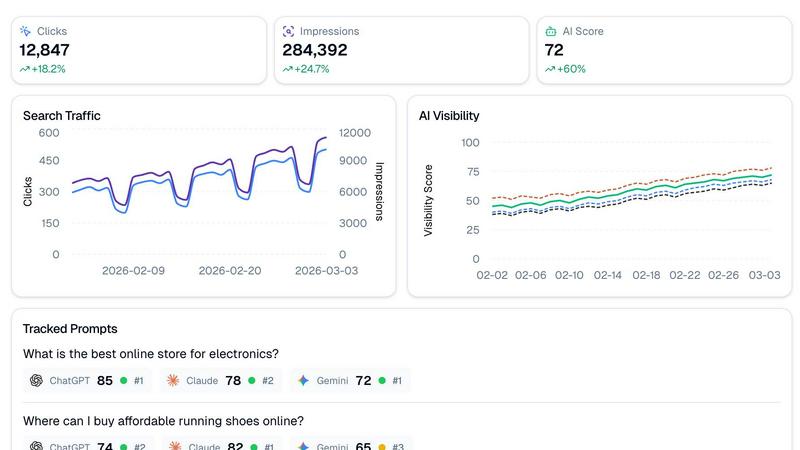
QuickSEO.ai provides a unified dashboard to track and improve your brand's visibility across both Google Search and leading AI chatbots.
Last updated: March 11, 2026

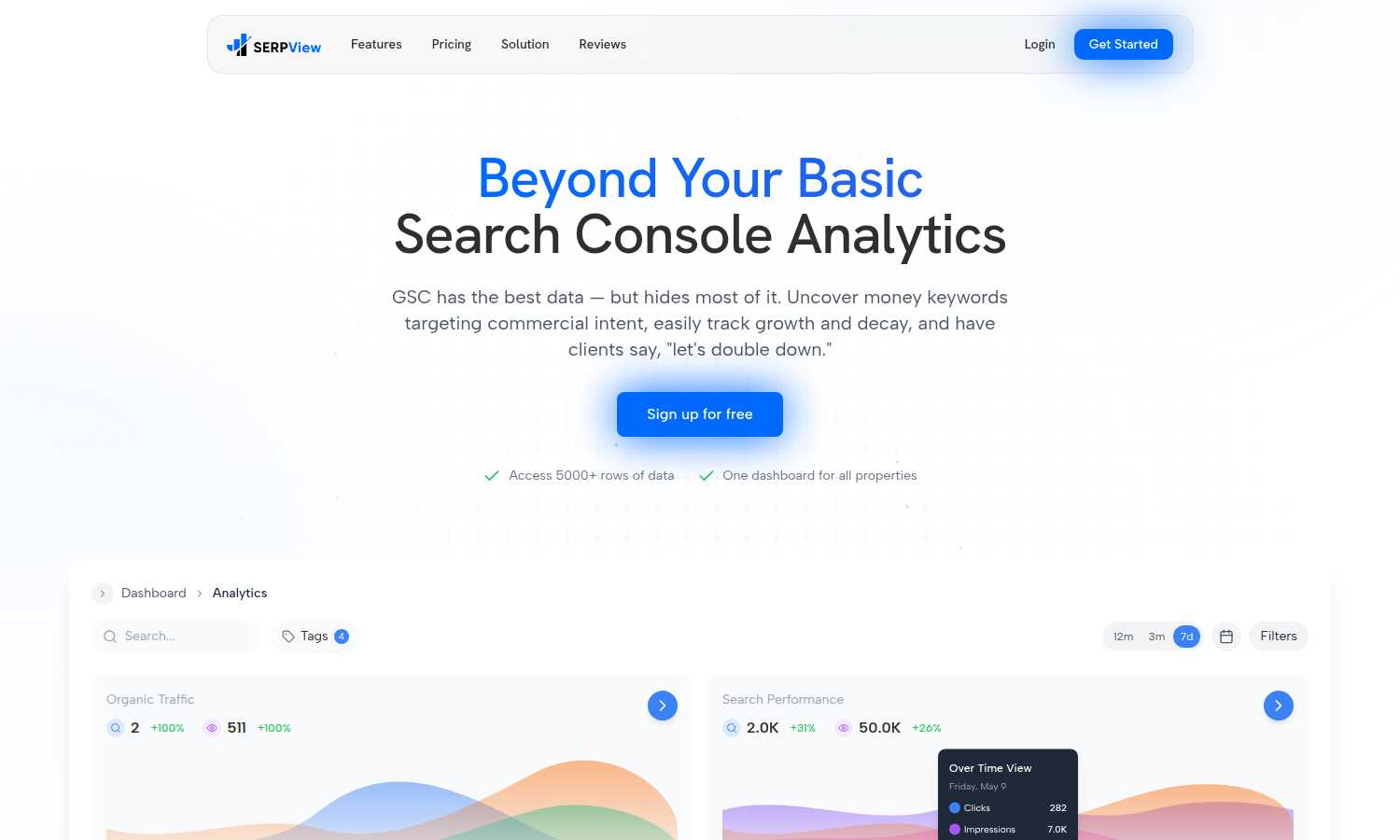
SERPView unlocks hidden Google Search Console data for superior SEO insights and performance.
Last updated: March 1, 2026
Visual Comparison
quickseo.ai
SERPView
Feature Comparison
quickseo.ai
Unified Search & AI Dashboard
This foundational feature consolidates Google Search Console analytics (clicks, impressions, CTR, rankings) with AI visibility metrics into one comprehensive interface. It eliminates the need to juggle multiple platforms, providing a holistic view of your brand's performance across both traditional and AI-driven search channels. This unified perspective is critical for allocating resources effectively and understanding the total traffic opportunity.
AI Visibility Scoring & Prompt Tracking
QuickSEO.ai provides daily visibility scores across ChatGPT, Claude, and Gemini, tracking performance trends over time. Users can define and monitor specific prompts (e.g., "best online store for electronics") that represent their core customer queries. The platform shows exactly where your brand ranks in the AI's response for each prompt, offering precise, actionable data on your share of voice in conversational AI.
Sentiment Analysis & Cited Page Monitoring
The platform analyzes the tone and sentiment with which AI chatbots discuss your brand, categorizing mentions as positive, neutral, or negative. Furthermore, it identifies which specific pages on your website (e.g., blog posts, product pages) are cited as sources by the AI. This allows you to understand not just if you are mentioned, but how and what content is driving that visibility, guiding content strategy.
Competitor Tracking & Page Group Analytics
QuickSEO.ai automatically extracts competitor brands that appear alongside yours in AI responses, providing competitive intelligence. The Page Groups feature allows you to organize URLs by category (e.g., blog, product, documentation) to analyze which sections of your site drive the most search and AI traffic. This enables granular performance analysis and helps prioritize optimization efforts for high-impact site sections.
SERPView
Unrestricted Performance Tracking
SERPView provides unrestricted access to over 50,000 rows of Google Search Console data, shattering the native 1,000-row limit. This allows for comprehensive tracking of clicks, impressions, CTR, and average position across your entire keyword portfolio. Enterprise teams can analyze complete datasets to identify granular trends, measure campaign impact with precision, and make decisions based on a full picture of search performance, eliminating the guesswork caused by data sampling.
Advanced Keyword & Page Analysis
Go beyond surface-level metrics to uncover high-intent commercial keywords and top-performing pages. The platform enables deep-dive analysis into keyword ranking fluctuations over time and evaluates page-level performance to pinpoint both opportunities and underperforming assets. This feature directly supports content strategy refinement and resource allocation, ensuring efforts are focused on terms and pages with the highest potential for traffic and conversion growth.
Consolidated Multi-Property Dashboard
Manage all connected Google Search Console properties and websites from a single, unified interface. This eliminates the inefficiency of logging into multiple accounts and toggling between views. Teams can gain a holistic view of their entire domain portfolio's search health, compare performance across properties, and streamline reporting processes, significantly boosting operational efficiency and cross-team visibility.
Intelligent Topic Clustering & Device Analysis
SERPView intelligently groups keywords into topic clusters, allowing you to assess the performance of entire content themes and strategic pillars at a glance, rather than analyzing individual pages in isolation. Coupled with detailed mobile versus desktop performance breakdowns, this feature empowers strategic optimization for user intent and device-specific experience, a critical factor for modern SEO and user engagement metrics.
Use Cases
quickseo.ai
Proactive AI Market Share Capture
Marketing teams use QuickSEO.ai to identify high-intent industry prompts where their brand is absent or underperforming in AI responses. By tracking these gaps and monitoring rising competitors, they can strategically optimize content and digital assets to secure prominent positioning in AI-generated answers, directly capturing traffic from this new channel before competitors dominate.
Integrated SEO & AI Strategy Development
SEO and content managers leverage the unified dashboard to correlate traditional keyword performance with AI visibility scores. This allows them to develop a cohesive strategy, identifying topics that perform well in Google Search but are overlooked by AI, or vice-versa, ensuring their content portfolio is optimized for maximum visibility across the entire search ecosystem.
Brand Reputation Management in AI
Communications and brand managers utilize the sentiment analysis and cited page monitoring features to oversee how AI perceives and represents their brand. By understanding the sentiment trends and which pages are sourced, they can proactively address potential misrepresentations, reinforce positive messaging, and ensure key brand assets are accurately referenced.
ROI-Focused Content Investment
Digital directors employ the Page Group Analytics and Cited Pages data to measure the tangible return on investment for different content types. By seeing which blog sections or product pages generate the most impressions and citations in AI, they can make data-backed decisions to allocate budget and resources toward the content formats that drive real visibility and authority.
SERPView
Enterprise SEO Reporting & Agency Client Management
SEO agencies and in-house enterprise teams use SERPView to automate and scale client reporting. The ability to aggregate data from multiple properties into clean, insightful dashboards saves dozens of manual hours per month. Teams can provide clients with professional, data-rich reports that highlight progress, ROI, and strategic recommendations, enhancing client trust and demonstrating clear value from SEO investments.
Identifying High-Value Commercial Intent Keywords
Digital marketers leverage SERPView's deep keyword analysis to filter through thousands of search queries to identify those with clear commercial intent. By tracking position changes for these priority keywords, teams can focus link-building and content optimization efforts where they will have the most direct impact on lead generation and revenue, maximizing the return from their SEO activities.
Content Strategy Audits & Optimization
Content managers and strategists utilize the page analysis and topic clustering features to conduct thorough content audits. They can quickly identify top-performing pages to update and repurpose, as well as spot underperforming content that requires optimization or consolidation. This data-driven approach ensures content development is aligned with actual search demand and performance metrics.
Correlating Rankings with Algorithm Updates
SEO specialists use SERPView's annotation feature to mark Google's core algorithm updates and major site changes directly on performance charts. This allows for clear correlation analysis between ranking fluctuations and specific events, enabling faster diagnosis of traffic drops or gains and more informed strategic adjustments in response to search engine volatility.
Overview
About quickseo.ai
QuickSEO.ai is an enterprise-grade analytics platform designed to unify traditional search engine optimization (SEO) with the new frontier of AI-powered search visibility. It directly addresses a critical blind spot for modern marketing and SEO teams: the inability to track brand performance across major AI chatbots like ChatGPT, Claude, and Gemini. The platform seamlessly integrates Google Search Console data with proprietary AI visibility tracking, providing a single source of truth for a brand's discoverability across all major search interfaces. It is built for marketing directors, SEO managers, and digital strategists at companies that recognize the strategic shift where a significant portion of consumer queries now originate in conversational AI. The core value proposition is clear: to prevent revenue leakage by ensuring your brand is captured in the estimated $750B of consumer spending projected to flow through AI search, while simultaneously optimizing for traditional organic traffic. By offering daily AI visibility scores, tracked prompt rankings, and competitor analysis, QuickSEO.ai transforms guesswork into actionable intelligence, enabling data-driven decisions to capture market share in the evolving search landscape.
About SERPView
SERPView is an enterprise-grade SEO analytics platform engineered to unlock the full potential of Google Search Console data for digital marketing teams, SEO agencies, and business owners. It directly addresses the critical limitations of the native Google Search Console interface, which restricts data access to 1,000 rows and fragments insights across disparate properties. By providing seamless access to over 50,000 rows of performance data, SERPView transforms raw search metrics into a centralized, actionable command center. The platform is designed for professionals who require depth, scalability, and clarity in their SEO reporting to drive strategic decisions. Its core value proposition lies in elevating productivity and ROI by eliminating manual data aggregation, revealing hidden keyword and content opportunities, and enabling precise tracking of performance against business goals. With SERPView, organizations can consolidate all their GSC properties into a single dashboard, apply advanced filters and tags, and gain longitudinal insights that are simply inaccessible through standard tools, ensuring no valuable signal is lost and every optimization is data-informed.
Frequently Asked Questions
quickseo.ai FAQ
How does QuickSEO.ai track rankings in AI chatbots?
QuickSEO.ai uses proprietary technology to programmatically query major AI platforms like ChatGPT, Claude, and Gemini using your defined prompts. It then analyzes the responses to detect mentions of your brand, competitors, and sourced URLs. The system calculates a daily visibility score based on the frequency and prominence of these mentions, simulating real-user interactions to provide accurate, actionable rankings.
What is the difference between Google Search Console and AI visibility?
Google Search Console provides data on how your website performs in Google's traditional web search index, tracking clicks from search results pages. AI visibility tracks how often and in what context your brand is mentioned within the responses of conversational AI chatbots, which is a fundamentally different discovery paradigm. QuickSEO.ai bridges this gap, as both are now critical, complementary sources of organic traffic.
Can I track my competitors with this tool?
Yes, competitor tracking is a core feature. When QuickSEO.ai analyzes AI responses for your tracked prompts, it automatically identifies and extracts other brands that are mentioned alongside yours. This provides you with a clear view of your competitive landscape within AI search, showing which rivals are gaining visibility for key industry questions and allowing for strategic counter-initiatives.
How quickly does the data update?
Google Search Console data is synced regularly to reflect your website's latest performance. AI visibility scores and prompt rankings are updated daily, providing a near-real-time view of your brand's positioning across the major AI platforms. This frequent updating ensures you can react quickly to significant changes in your AI search visibility or sentiment.
SERPView FAQ
How does SERPView access more data than Google Search Console?
SERPView uses the official Google Search Console API to fetch and aggregate your website's search performance data. While the native GSC interface limits you to viewing 1,000 rows at a time for performance reasons, the API itself contains much more data. SERPView bypasses the UI limitation by systematically querying the API, collecting all available data (up to 50,000+ rows), and presenting it in a structured, analyzable format within its dashboard.
Can I connect multiple websites or GSC properties?
Yes, a core functionality of SERPView is the consolidation of multiple Google Search Console properties. You can connect numerous websites, domain properties, and URL prefix properties to a single SERPView account. All data is then accessible from one centralized dashboard, making it an ideal solution for agencies managing multiple clients or businesses with several domains or subdomains.
What is the benefit of tracking topic clusters?
Tracking individual keywords can be myopic. Topic clustering groups semantically related keywords together, allowing you to see how entire subject areas or content pillars are performing in search. This provides a strategic, high-level view of your content authority on specific topics, helps identify gaps in your coverage, and ensures your content strategy aligns with broader search themes rather than isolated terms.
How does the annotation feature for Google updates work?
SERPView maintains a timeline of confirmed Google algorithm updates (like Core Updates or helpful content updates). You can overlay these events on your performance charts. Additionally, you can add custom annotations for your own site events, such as a major redesign, CMS migration, or new content launch. This visual correlation helps you understand the cause behind significant ranking or traffic changes.
Alternatives
quickseo.ai Alternatives
quickseo.ai is an enterprise SEO and AI visibility platform designed for marketing teams. It operates within the competitive landscape of digital analytics and brand monitoring tools, specifically focusing on the convergence of traditional search engine optimization and emerging AI-powered search platforms. Businesses explore alternatives for various strategic reasons. Common drivers include budget constraints, the need for specific integrations with existing martech stacks, or requirements for different feature sets such as deeper social listening or more granular reporting capabilities. The decision often hinges on aligning tool functionality with precise ROI objectives and team workflows. When evaluating other solutions, key considerations should include the depth of AI model coverage, the sophistication of competitive intelligence, data security protocols, and the clarity of actionable insights provided. The goal is to select a platform that delivers measurable productivity gains and a clear understanding of brand performance across the entire digital ecosystem.
SERPView Alternatives
SERPView is a specialized SEO analytics and business intelligence platform designed to unlock the full potential of Google Search Console data. It empowers professionals to move beyond basic reporting into deep performance analysis, keyword discovery, and strategic optimization. Organizations may seek alternatives for various strategic reasons, including budget constraints, the need for a different feature mix, or integration requirements with a broader marketing technology stack. The decision often hinges on specific business needs and the scale of SEO operations. When evaluating alternatives, key considerations should include the depth of data access, the sophistication of analytical features, ease of integration, and the overall return on investment. The right tool should align with your team's expertise and directly support your core SEO and business intelligence objectives.