
LLMWise vs Pro Cursor Rules
Side-by-side comparison to help you choose the right AI tool.

LLMWise
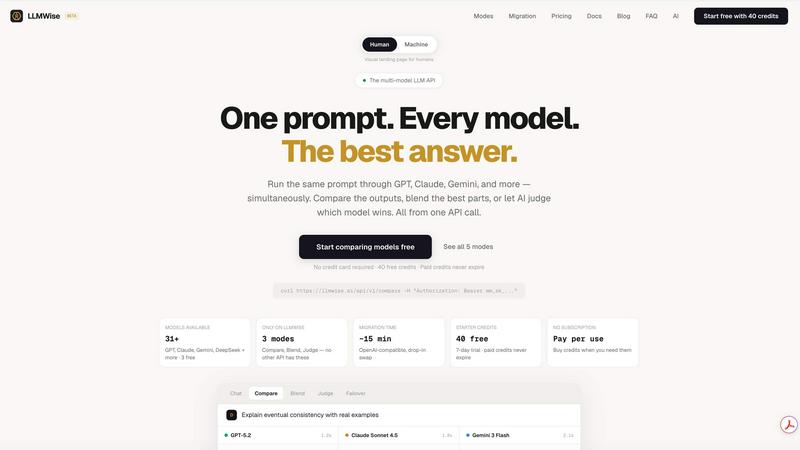
Access 62+ AI models from one API with auto-routing and pay only for usage, starting with 30 free models.
Last updated: February 26, 2026

Pro Cursor Rules
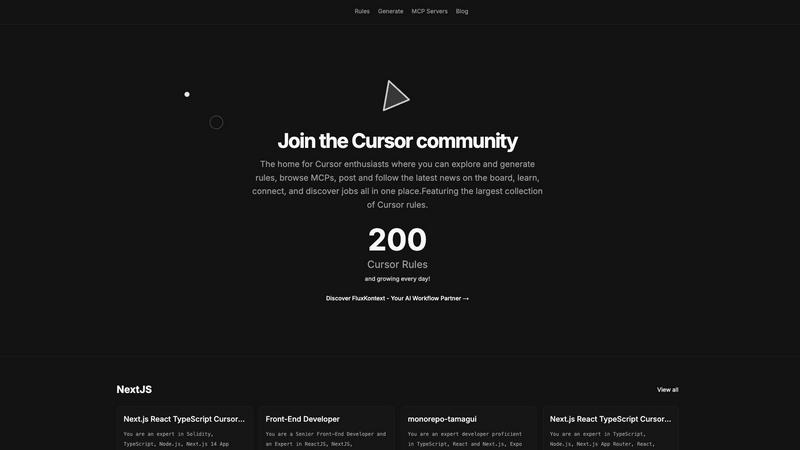
Pro Cursor Rules centralizes AI-powered developer rules to boost team productivity and accelerate project delivery.
Last updated: February 28, 2026
Visual Comparison
LLMWise
Pro Cursor Rules
Feature Comparison
LLMWise
Smart Routing
LLMWise employs an intelligent routing system that automatically directs prompts to the most suitable model based on the task at hand. Whether it is coding, creative writing, or translation, users can trust that their input will reach the optimal AI model, ensuring maximum efficiency and output quality.
Compare & Blend
With LLMWise's compare feature, users can run prompts across multiple models simultaneously to see how different AIs respond. The blend feature allows users to combine the best parts of each model’s output into a single, coherent response, enhancing the overall quality and relevance of the results.
Always Resilient
LLMWise incorporates a circuit-breaker failover mechanism that reroutes requests to backup models if a primary provider experiences downtime. This resilience ensures that applications remain operational without interruptions, safeguarding against potential service outages and maintaining a seamless user experience.
Test & Optimize
The platform provides robust benchmarking suites and batch testing capabilities, allowing users to optimize their usage based on speed, cost, or reliability. Automated regression checks further enhance the testing process, ensuring that outputs remain consistent and high-quality over time.
Pro Cursor Rules
Curated Enterprise Rule Repository
The platform hosts the largest centralized collection of expert-vetted Cursor Rules, covering leading frameworks and technologies like Next.js 14 App Router, React, TypeScript, Supabase, and Tailwind CSS. Each rule is a comprehensive set of AI instructions that encapsulate senior-level expertise, ensuring generated code adheres to modern best practices, security standards, and optimal architectural patterns right from the first prompt, eliminating guesswork and inconsistency.
AI-Powered Rule Generation Engine
Beyond browsing, the platform provides intelligent tools to generate custom, project-specific Cursor Rules. This feature allows teams to codify their unique internal standards, proprietary patterns, and company-specific architectural decisions directly into their AI workflow, ensuring the assistant acts as a true extension of the team's knowledge base and enforcing governance automatically across all developers.
Integrated MCP Server Hub
Pro Cursor Rules extends functionality by providing access to and information about Model Context Protocol (MCP) servers. This integration allows developers to seamlessly connect their Cursor editor to external data sources, tools, and APIs, transforming the AI assistant into a central command center that can interact with databases, design systems, and internal documentation, thereby unlocking advanced, context-rich development capabilities.
Collaborative Community & Knowledge Sharing
The platform is built around a vibrant community hub where developers and teams can share, rate, and discuss rules. This social layer accelerates collective learning, allows teams to discover and adopt industry-proven patterns quickly, and provides a channel for news, networking, and professional opportunities, fostering an ecosystem of continuous improvement and shared expertise.
Use Cases
LLMWise
Software Development
Developers can utilize LLMWise to access the best AI models for coding tasks. By routing prompts to models like GPT for code generation, developers can quickly find solutions to complex problems, significantly reducing debugging time and enhancing productivity.
Content Creation
Content creators can leverage LLMWise for generating high-quality articles, blogs, and marketing materials. By blending outputs from models specialized in creative writing, users can produce engaging content that resonates with their target audience, streamlining the content creation process.
Language Translation
LLMWise excels in translation tasks by intelligently routing requests to models like Gemini, which specialize in linguistic nuances. This ensures that translations are not only accurate but also contextually appropriate, enhancing communication across languages.
Research and Analysis
Researchers can benefit from LLMWise by comparing outputs from various models on data analysis tasks. This enables them to evaluate different AI perspectives and insights, allowing for a more comprehensive understanding of their research topics and facilitating informed decision-making.
Pro Cursor Rules
Standardizing Output Across Engineering Teams
Engineering leaders can deploy a standardized set of curated rules for their primary tech stack (e.g., Next.js, TypeScript, Tailwind) to ensure every developer, regardless of seniority, produces code that follows identical patterns, naming conventions, and architectural guidelines. This directly reduces code review burden by up to 40% and creates a consistent, maintainable codebase, crucial for scaling teams and long-term project health.
Accelerating New Developer Onboarding
Instead of weeks of manual mentorship and documentation review, new hires can be equipped with the team's specific Cursor Rules on day one. This instantly aligns them with the project's standards and patterns, allowing them to contribute production-ready code immediately. This use case dramatically shortens the onboarding ramp-up time, translating to faster time-to-productivity and significant cost savings.
Enforcing Architectural Governance & Best Practices
For organizations committed to specific architectural decisions (like using App Router, Shadcn UI, or a particular state management solution), rules act as an enforceable policy layer. The AI assistant will guide developers toward the approved tools and patterns while steering them away from anti-patterns, ensuring architectural integrity and reducing technical debt from the outset of every new feature or module.
Rapid Prototyping and Boilerplate Generation
Development teams can leverage technology-specific rules to generate entire feature scaffolds, configuration files, and complex component logic with expert-level structure in seconds. This eliminates the repetitive, low-value work of setting up projects, configuring libraries like Supabase or Stripe, or writing boilerplate code, allowing developers to focus their intellectual effort on solving unique business logic problems.
Overview
About LLMWise
LLMWise is a revolutionary platform designed to streamline access to the leading large language models (LLMs) in the industry by providing a single API that connects developers to multiple AI providers. Eliminating the cumbersome task of managing various subscriptions and APIs, LLMWise aggregates models from renowned names such as OpenAI, Anthropic, Google, Meta, xAI, and DeepSeek. This enables users to select the most appropriate model for each specific task through intelligent routing. By matching prompts with the best-suited model, LLMWise enhances efficiency and optimizes output quality. Developers, startups, and enterprises benefit from reduced costs, increased productivity, and the flexibility to adapt to the evolving landscape of AI technologies. With LLMWise, organizations can leverage the power of AI without the complexity, making it an essential tool for anyone looking to harness the full potential of advanced AI capabilities.
About Pro Cursor Rules
Pro Cursor Rules is the definitive enterprise-grade platform and community hub engineered for development teams and engineering leaders who leverage the Cursor AI code editor. It addresses a critical gap in AI-assisted development by transforming the generic AI pair programmer into a specialized, context-aware team member aligned with your specific technology stack and architectural standards. The platform's core is a vast, curated, and shareable repository of "Cursor Rules"—pre-configured AI agent instructions that codify coding standards, framework-specific best practices, and architectural patterns for technologies like Next.js, React, TypeScript, Supabase, Tailwind CSS, and beyond. This centralized knowledge base serves as a collaborative ecosystem, enabling teams to standardize output, enforce governance, and dramatically accelerate onboarding and development velocity. For engineering leadership, the value proposition is clear and measurable: a direct ROI through significant reductions in boilerplate coding, minimized code review cycles, enforced consistency, and the elimination of costly context-switching. Pro Cursor Rules is not merely a tool; it is a strategic asset for systematically harnessing AI to improve software quality, team efficiency, and predictable delivery at scale.
Frequently Asked Questions
LLMWise FAQ
How does LLMWise ensure optimal model selection?
LLMWise utilizes an intelligent routing algorithm that analyzes the nature of each prompt and directs it to the most suitable model based on its strengths and capabilities, ensuring high-quality outputs.
Is there a cost associated with using LLMWise?
LLMWise operates on a pay-as-you-go model, allowing users to pay only for what they use. There are no subscriptions, and users receive 20 free credits to start without any commitment.
Can I use my existing API keys with LLMWise?
Yes, LLMWise supports Bring Your Own Key (BYOK), enabling users to integrate their existing API keys from various providers seamlessly, thus reducing costs and complexity.
What types of models are available through LLMWise?
LLMWise offers access to over 62 models from 20 different AI providers, including popular names like OpenAI, Anthropic, and Google, covering a wide range of tasks and applications.
Pro Cursor Rules FAQ
What exactly is a "Cursor Rule"?
A Cursor Rule is a detailed set of instructions and context provided to the Cursor AI editor's underlying language model. It defines your preferred coding standards, architectural patterns, technology choices, and stylistic preferences. Think of it as a specialized "persona" or guide that transforms the general-purpose AI into a senior developer expert in your specific stack, ensuring every code suggestion and generation aligns perfectly with your team's requirements.
How does Pro Cursor Rules ensure the quality of its shared rules?
The platform operates on a community-driven model with curation. Rules are often created and shared by experienced developers and industry experts. Users can browse, try, and rate rules, with the most effective and popular ones rising to prominence. This social proof mechanism, combined with the platform's focus on enterprise-grade content, creates a repository where quality is continuously validated and improved by the community itself.
Can I create and use private rules for my company?
Yes, a core value proposition of Pro Cursor Rules is the ability to generate and manage custom, private rules. This allows your engineering team to codify proprietary patterns, internal APIs, and company-mandated security or style guidelines into your AI workflow. These private rules ensure your competitive advantages and internal knowledge remain secure while still leveraging the platform's generation and management tools.
Do I need to be an expert to use or create rules?
Not at all. While creating highly sophisticated rules benefits from deep expertise, the platform is designed to be accessible. Developers can immediately browse and apply existing rules from the vast public library with a single click. Furthermore, the rule generation tools guide users in structuring their instructions, making it straightforward for team leads to encapsulate their key standards without needing to be prompt engineering experts.
Alternatives
LLMWise Alternatives
LLMWise is a cutting-edge API designed for AI assistants, offering seamless access to various large language models (LLMs) including GPT, Claude, and Gemini. By utilizing intelligent routing, it ensures that each prompt is directed to the most suitable model for optimal results. As businesses increasingly adopt AI technologies, users often seek alternatives to LLMWise to explore different pricing structures, feature sets, and platform compatibility that may better fit their unique needs. When evaluating alternatives, it is essential to consider factors such as the range of models offered, the flexibility in pricing, and the robustness of features like smart routing and failover capabilities. Additionally, users should assess the ease of integration, support for existing API keys, and the ability to test and optimize performance to ensure that their chosen solution delivers maximum ROI and enhances productivity.
Pro Cursor Rules Alternatives
Pro Cursor Rules is the definitive enterprise platform for developers and engineering teams using the Cursor AI code editor. It functions as a centralized hub for sharing and discovering AI-powered rules, which are pre-configured instructions that transform the AI assistant into a specialized, context-aware team member. This category focuses on maximizing developer productivity, enforcing code consistency, and accelerating development velocity through structured AI guidance. Users may explore alternatives for various strategic reasons. Common drivers include budget constraints, specific feature requirements not met by the core offering, or a need for a different deployment model. Some teams might seek solutions with a different focus, such as more granular integration capabilities or alternative community-driven approaches to rule curation and sharing. When evaluating alternatives, key considerations should align with core business objectives. Prioritize solutions that demonstrably improve team efficiency and code quality. Assess the depth and relevance of the rule library to your tech stack, the flexibility for customization, and the platform's ability to scale with your team. The ultimate goal is to secure a measurable return on investment through reduced boilerplate, faster onboarding, and enforced architectural governance.