
diffray vs Fallom
Side-by-side comparison to help you choose the right AI tool.

diffray
Enhance your coding efficiency with diffray's AI that detects real bugs while reducing false positives for superior.
Last updated: February 28, 2026

Fallom delivers real-time observability for LLMs, enhancing tracking, debugging, and cost management for AI operations.
Last updated: February 28, 2026
Visual Comparison
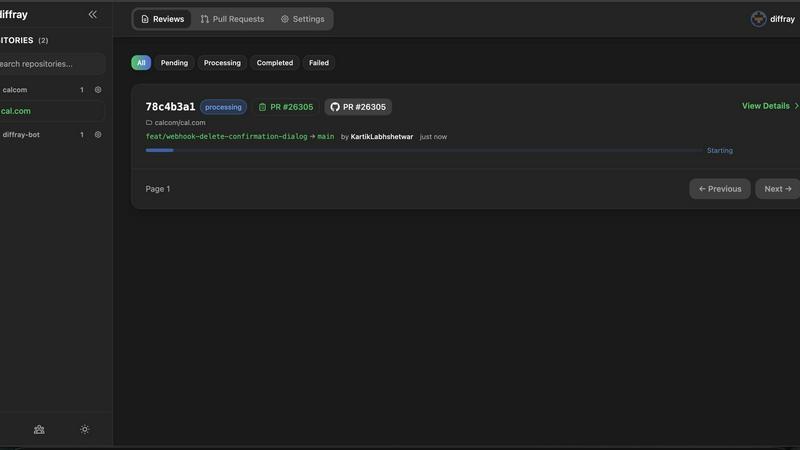
diffray
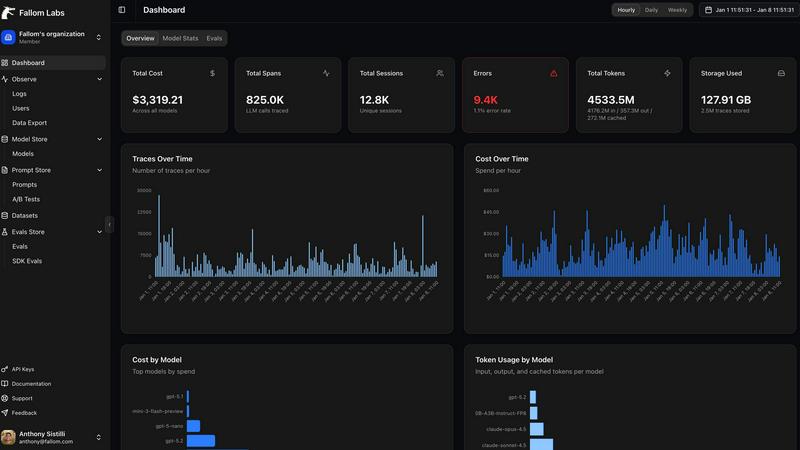
Fallom
Feature Comparison
diffray
Multi-Agent System
diffray’s standout feature is its multi-agent system, which utilizes over 30 specialized agents. Each agent focuses on a specific area of code quality, such as security, performance, and best practices, allowing for a more nuanced and effective review process.
Reduced False Positives
By employing multiple specialized agents, diffray significantly decreases the incidence of false positives in code reviews. This results in an 87% reduction in irrelevant alerts, allowing developers to focus on critical issues that truly impact code quality.
Faster Review Process
diffray streamlines the PR review workflow, cutting the average review time from 45 minutes to just 12 minutes per week. This significant reduction enhances productivity, enabling development teams to allocate more time to coding and less time to reviewing.
Comprehensive Code Analysis
The tool provides a thorough analysis of code quality, covering various aspects from security vulnerabilities to performance bottlenecks. This comprehensive review ensures that developers receive detailed feedback, which is crucial for maintaining high coding standards.
Fallom
Real-Time Observability
Fallom offers real-time observability for AI agents, allowing organizations to track tool calls, analyze execution timing, and debug performance issues with confidence. This transparency ensures that teams can identify bottlenecks and optimize workflows proactively.
Cost Attribution
With Fallom, businesses can track spending per model, user, and team, achieving full cost transparency for budgeting and chargeback purposes. This feature empowers organizations to manage their AI expenditures effectively and optimize resource allocation.
Compliance Ready
Fallom is equipped with comprehensive audit trails, ensuring organizations can meet regulatory requirements such as the EU AI Act, SOC 2, and GDPR. Features like input/output logging, model versioning, and user consent tracking help maintain compliance and support organizational accountability.
Session Tracking and Debugging
Fallom allows users to group traces by session, user, or customer, providing complete contextual visibility into interactions. This feature facilitates debugging and enhances the understanding of user behavior, enabling data-driven decision-making.
Use Cases
diffray
Accelerated Development Cycles
Software development teams can leverage diffray to accelerate their development cycles. The significant reduction in PR review time allows teams to push code changes more frequently, leading to faster project completions and improved agility.
Enhanced Code Quality
With diffray's focus on specific code quality dimensions, teams can enhance the overall quality of their codebase. Developers receive targeted feedback that helps them address potential issues early in the development process, mitigating risks associated with code defects.
Improved Collaboration
diffray’s efficient review process fosters better collaboration among team members. By minimizing irrelevant alerts and focusing on actionable insights, developers can engage in more constructive discussions around code quality, leading to a more harmonious workflow.
Risk Mitigation
By identifying security vulnerabilities and performance issues early, diffray plays a critical role in risk mitigation. Development teams can address these concerns proactively, thereby reducing the likelihood of costly fixes post-deployment.
Fallom
Enhancing Debugging Processes
Organizations can leverage Fallom to streamline their debugging processes by tracing every function call, argument, and result in their agents. This visibility reduces the time spent on identifying and resolving issues within LLM workflows.
Budget Management and Cost Control
Fallom's cost attribution feature is ideal for finance teams that need to monitor and control AI-related expenditures. By tracking costs associated with each model and user, businesses can make informed decisions about their AI investments.
Regulatory Compliance Management
For businesses operating in regulated industries, Fallom provides the necessary tools to maintain compliance with audit trails and privacy controls. This ensures that organizations can operate confidently while adhering to stringent legal requirements.
Performance Evaluation and Optimization
Fallom enables organizations to run evaluations on LLM outputs, allowing teams to catch regressions before production. This capability helps maintain high-quality outputs and optimizes the overall performance of AI models.
Overview
About diffray
diffray is a revolutionary AI-driven code review tool meticulously crafted to enhance the workflow of software development teams. It transcends the limitations of conventional AI code review solutions by implementing a unique multi-agent system comprising over 30 specialized agents. Each agent is designed to assess a specific dimension of code quality, including security vulnerabilities, performance optimization, bug detection, adherence to best practices, and search engine optimization (SEO). This tailored approach minimizes irrelevant feedback in pull requests (PRs), achieving a remarkable 87% reduction in false positives while identifying three times more genuine issues. Consequently, diffray streamlines the PR review process, reducing the average review time from 45 minutes to an astonishing 12 minutes per week. This considerable efficiency gain positions diffray as an indispensable resource for developers aiming to elevate their coding standards and ensure timely, high-quality code delivery.
About Fallom
Fallom is a cutting-edge AI-native observability platform specifically designed to enhance the performance and management of large language models (LLMs) and agent workloads. By offering organizations unparalleled visibility into every LLM call made in production, Fallom enables comprehensive end-to-end tracing that includes critical components such as prompts, outputs, tool calls, tokens, latency, and cost per call. This platform is tailored for businesses requiring robust observability tools to navigate the complexities of AI operations, ensuring that teams can monitor usage in real-time, debug issues swiftly, and effectively allocate spending across various models, users, and teams. Additionally, Fallom provides essential session, user, and customer-level context, which is particularly vital for organizations operating in regulated environments. This includes delivering enterprise-ready audit trails, logging, model versioning, and consent tracking to meet compliance standards. With a single OpenTelemetry-native SDK, teams can instrument their applications within minutes, making Fallom an indispensable tool for organizations aiming to boost their LLM operational efficiency and compliance readiness.
Frequently Asked Questions
diffray FAQ
What makes diffray different from other code review tools?
diffray stands out due to its multi-agent system that employs over 30 specialized agents, each focusing on specific aspects of code quality. This targeted approach leads to fewer false positives and more accurate issue identification.
How does diffray reduce review time so significantly?
By providing precise and actionable feedback through its specialized agents, diffray eliminates unnecessary noise in pull requests. This efficiency allows developers to conduct reviews in a fraction of the time typically required.
Can diffray integrate with existing development tools?
Yes, diffray is designed to seamlessly integrate with popular development tools and platforms, ensuring that teams can incorporate it into their existing workflows without disruption.
Is diffray suitable for teams of all sizes?
Absolutely. diffray is scalable and can benefit teams of any size, from small startups to large enterprises, by enhancing code quality and streamlining the development process.
Fallom FAQ
What is Fallom used for?
Fallom is used for enhancing visibility and observability in large language model operations, enabling organizations to monitor, debug, and optimize AI workloads effectively.
How does Fallom ensure compliance with regulations?
Fallom ensures compliance by providing comprehensive audit trails, input/output logging, model versioning, and user consent tracking, making it suitable for organizations in regulated industries.
Can Fallom integrate with existing AI infrastructures?
Yes, Fallom utilizes a single OpenTelemetry-native SDK that is compatible with various AI providers, ensuring seamless integration into existing systems without vendor lock-in.
How quickly can teams get started with Fallom?
Teams can set up Fallom in under five minutes, allowing organizations to start tracing and monitoring their AI agents almost immediately, boosting productivity from the outset.
Alternatives
diffray Alternatives
diffray is a cutting-edge AI-driven code review tool that enhances code quality through its innovative multi-agent architecture. This tool belongs to the development category and is designed to help software development teams improve their workflow by identifying real bugs while minimizing false positives. Users commonly seek alternatives to diffray for various reasons, including pricing considerations, specific feature requirements, or compatibility with existing platforms. When looking for an alternative, it is crucial to evaluate factors such as the architecture of the tool, the comprehensiveness of its feedback, and the overall impact on productivity and code quality.
Fallom Alternatives
Fallom is an advanced AI-native observability platform specifically designed for large language models (LLM) and agent workloads. It provides real-time visibility into LLM operations, enabling organizations to track, debug, and manage costs efficiently across their AI initiatives. As businesses increasingly adopt AI technologies, users often seek alternatives to Fallom for various reasons, including pricing structure, specific feature sets, or the need for integration with existing platforms. When evaluating alternatives, it is essential to consider factors such as functionality, ease of use, compliance capabilities, and overall return on investment to ensure the chosen solution meets organizational needs. In the rapidly evolving landscape of AI observability, organizations may find that their requirements change over time. Users often look for alternatives that offer enhanced features, better scalability, or improved cost management tools. It’s crucial to assess the compatibility of the alternative with current workflows and to ensure that it can provide the necessary insights and data for effective decision-making. A thorough evaluation of potential alternatives can help businesses maintain operational efficiency and compliance as they navigate the complexities of AI deployment.