
Shack vs Zenor AI
Side-by-side comparison to help you choose the right AI tool.

Shack
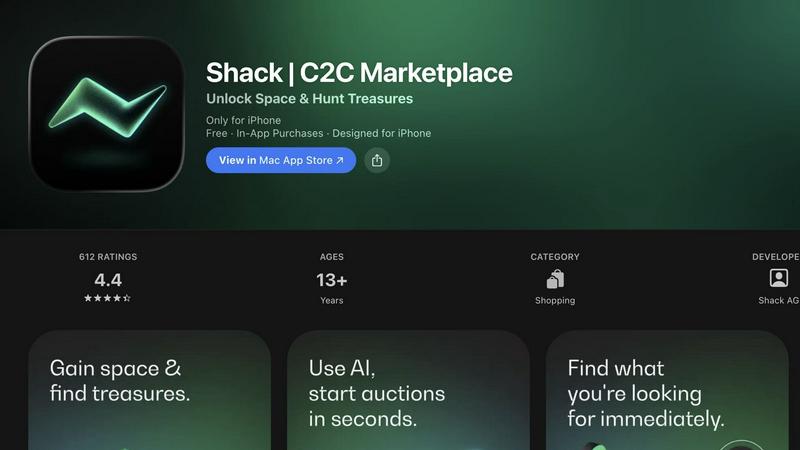
Shack is an AI-powered C2C marketplace enabling fee-free local auctions to unlock asset value instantly.
Last updated: February 28, 2026

Zenor AI
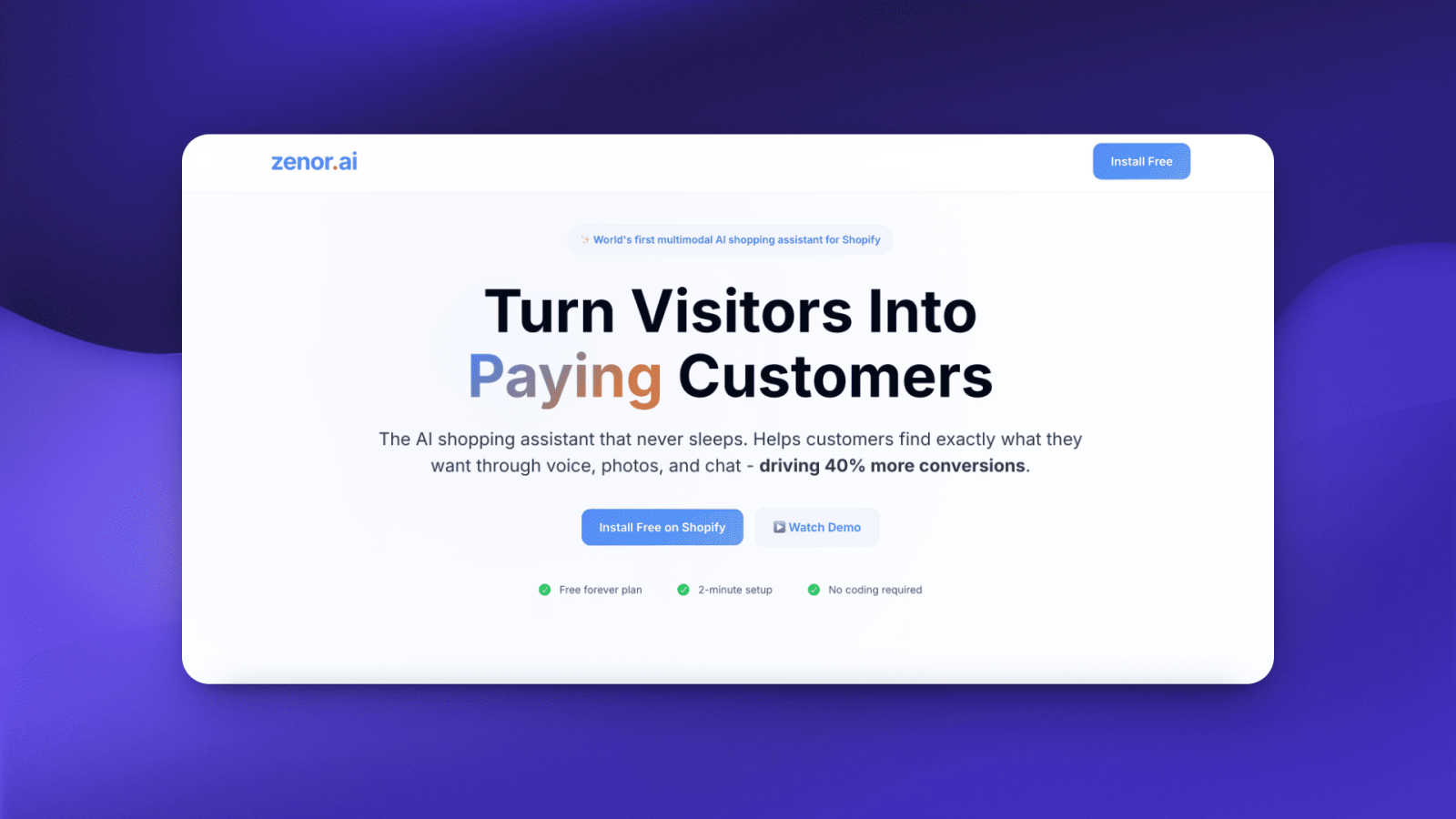
Zenor AI ensures Shopify stores are visible and recommended by AI assistants like ChatGPT and Google AI.
Last updated: March 1, 2026
Visual Comparison
Shack
Zenor AI
Feature Comparison
Shack
AI-Powered Auction Launch
Shack's proprietary AI, acting as an intelligent wingman, automates the entire listing process to maximize seller productivity. By simply taking a photo, the AI generates optimized titles, detailed descriptions, relevant keywords, and competitive price suggestions. This feature reduces auction creation time from minutes to seconds, ensuring listings are comprehensive and market-ready, which directly increases the probability of a successful and profitable sale.
100% Fee-Free Marketplace
Shack operates on a transparent, no-fee economic model for core transactions. The platform does not charge listing fees, final value fees, or processing fees to buyers or sellers, ensuring maximum ROI for users. This commitment removes a significant barrier to entry and repeat usage, fostering a high-volume trading environment. Platform maintenance is supported through an optional in-app currency (Shack Coins) for advanced features, keeping the primary marketplace completely free.
Interactive Local Discovery Map
The integrated map feature provides a geo-spatial interface for discovering auctions, transforming local commerce. Users can visually explore available items in their immediate vicinity, facilitating easy local pickup and fostering community-based trade. This tool enhances buyer engagement by showcasing real-time, nearby opportunities and helps sellers gain visibility from a relevant, local audience, increasing the speed of transactions.
Verified Safety & Authenticity Curation
Shack enforces platform integrity through multi-layered verification. "Police Shack" AI verifies seller identities, while a manual review process curates all auctions to ensure they are for authentic second-hand items only. This proactive moderation blocks professional retailers and drop-shipped new goods, maintaining a trusted, peer-to-peer ecosystem. This reduces fraud risk and builds user confidence, which is critical for transaction completion rates.
Zenor AI
Multimodal Shopping Assistant
This feature integrates advanced voice, visual, and text-based AI chat directly into the Shopify storefront. Customers can describe what they need in their own words, ask complex questions, or upload a photo to find similar products. The assistant understands intent, pulls relevant items from the catalog, and can handle cart modifications, checkout initiation, and answer FAQs regarding shipping or returns, creating a seamless, conversational buying journey that reduces friction and mimics in-store assistance.
AI Visibility Audit & Reporting
Zenor AI conducts a deep, 30+ point diagnostic scan of a Shopify store to assess its readiness for AI search platforms. Unlike basic SEO tools, it specifically checks for AI crawler access (e.g., GPTBot, PerplexityBot), evaluates the quality and structure of product descriptions for LLM comprehension, and audits JSON-LD schema markup tailored for AI recommendation engines. The report provides a prioritized, actionable scorecard in under 60 seconds, with no installation required.
Done-For-You AI Optimization
Beyond identification, Zenor AI provides a hands-on implementation service. Their team directly handles the technical fixes required for AI visibility, including configuring the store's robots.txt to allow AI crawlers, implementing and enhancing structured data schema for large language models, and advising on content optimization. This turnkey solution ensures stores are technically prepared to be cited and recommended by AI assistants without requiring merchant resources or coding expertise.
Competitor AI Visibility Benchmarking
This analytical feature provides critical market context by comparing a store's AI visibility score against its direct competitors. It reveals not just internal gaps but strategic opportunities in the landscape, showing which rivals are currently winning AI-driven recommendations. This intelligence allows merchants to prioritize fixes that will have the most significant competitive impact and understand the direct ROI of AI visibility investments.
Use Cases
Shack
Sustainable Home Decluttering & Asset Monetization
Individuals and families can efficiently convert clutter into capital. Users rapidly list unwanted but valuable items like electronics, furniture, or collectibles using the AI photo scan. This provides a streamlined path to monetize idle assets, recover value, and contribute to waste reduction, aligning personal finance goals with sustainable living practices.
Sourcing Unique Inventory for Resale Businesses
Entrepreneurs and small business owners utilize Shack as a sourcing platform for unique, non-mass-produced goods. The interactive map allows for efficient geographical sourcing, while the AI-powered search helps identify undervalued items. This use case enables a profitable business model based on arbitrage, with the fee-free structure ensuring higher profit margins on flipped items.
Localized Corporate Asset Disposal
Businesses can leverage the platform for decommissioning office equipment, furniture, or promotional items in a secure, localized manner. Listing items for auction to a local audience ensures quick removal and cost recovery. The verification process provides a record of transaction legitimacy, making it a viable channel for responsible asset lifecycle management.
Secure Collectible Trading & Community Engagement
Collectors and enthusiasts use Shack to trade niche items within a trusted community. The focus on authenticity and the ban on professional sellers creates an ideal environment for trading collectibles like vinyl records, vintage gear, or memorabilia. Real-time bidding adds an engaging, gamified element to the acquisition process for high-demand items.
Zenor AI
Boosting Conversion Rates for High-Consideration Products
For stores selling complex, feature-rich, or high-value items (e.g., electronics, skincare, specialty apparel), the multimodal assistant guides uncertain shoppers. Customers can ask specific, nuanced questions ("Which blender is best for crushing ice and hot soups?" or "Find a non-comedogenic foundation for oily skin with SPF 30"). By providing instant, accurate, and personalized answers, Zenor shortens the research phase, builds trust, and directly converts hesitant browsers into confident buyers.
Capturing Demand from AI Search Platforms
Merchants are losing potential customers when AI tools like ChatGPT recommend competitor products. A store selling organic cotton bedding, for example, is invisible if its robots.txt blocks AI crawlers. Zenor's audit identifies and fixes this, ensuring the store appears when a user asks, "What are the best organic sheet sets under $150?" This use case is about acquiring high-intent traffic from the new discovery layer of the internet, protecting and growing market share.
Reducing Customer Support Ticket Volume
The AI assistant autonomously handles a high volume of repetitive, pre-purchase and post-purchase inquiries. Questions about order status, return policies, shipping timelines, and basic product specifications are answered instantly within the chat interface 24/7. This use case directly translates to operational efficiency, freeing human support agents to handle complex, high-value issues and significantly lowering support costs per customer.
Increasing Average Order Value (AOV) via Smart Upselling
During a conversational shopping session, Zenor AI can intelligently recommend complementary products based on the customer's stated needs and cart contents. For instance, if a customer is looking for a coffee maker, the assistant can suggest compatible filters, a specific coffee grinder, or premium beans. This contextual, helpful guidance mimics a knowledgeable sales associate and effectively increases basket size without appearing pushy.
Overview
About Shack
Shack is an enterprise-grade, AI-powered auction platform engineered to transform the consumer-to-consumer (C2C) marketplace. Designed in Switzerland and now operational in Switzerland, Germany, Austria, and the United States, it facilitates the efficient buying and selling of authenticated second-hand goods. The platform directly addresses corporate sustainability goals and consumer demand for circular economy models by reducing waste and promoting the reuse of valuable assets. Shack empowers a diverse user base, from individuals decluttering homes to savvy entrepreneurs flipping items, by eliminating traditional friction points in online auctions. Its core value proposition is a 100% fee-free transaction model for buyers and sellers, coupled with proprietary AI automation that drastically reduces listing time and operational overhead. By focusing on authenticity, local discovery via an interactive map, and real-time bidding, Shack delivers a secure, focused marketplace that drives user engagement and transaction velocity without the clutter of mass-produced goods or data-sharing with advertisers.
About Zenor AI
Zenor AI is a dual-platform solution engineered to future-proof Shopify merchants in the age of AI-driven commerce. It addresses two critical fronts: AI-powered customer engagement and AI search visibility. First, as a cutting-edge multimodal shopping assistant, Zenor AI transforms the on-site customer experience. It enables shoppers to interact with your store using natural language via text or voice, upload images for visual search, and get instant, intelligent product recommendations and support. This directly streamlines the path to purchase, boosting conversion rates and average order value while deflecting routine customer service inquiries. Second, and uniquely, Zenor AI provides a comprehensive AI Visibility Audit and optimization service. With 40% of product discovery now occurring through AI platforms like ChatGPT and Perplexity, Zenor ensures your products are correctly indexed and recommended by these new "search engines." It audits and fixes critical technical elements like AI crawler access, LLM-specific schema markup, and AI-ready content. The core value proposition is clear: maximize immediate sales through superior conversational commerce while securing your future revenue stream by guaranteeing visibility in the AI-powered discovery channels that are rapidly replacing traditional organic search.
Frequently Asked Questions
Shack FAQ
Are there any fees for buying or selling on Shack?
No, buying and selling on Shack are completely free of charge. The platform does not charge any transaction, listing, or final value fees to either party. This 100% fee-free model is core to Shack's value proposition. Optional in-app features may utilize Shack Coins, but the core marketplace functionality remains free.
What payment methods are supported on the platform?
Buyers can pay sellers directly using various methods based on seller preference and region. Supported options include CHF via TWINT, EUR, PayPal, and optional cryptocurrency for peer-to-peer payments. This flexibility accommodates user preference while facilitating fast, direct settlements between parties.
How does Shack ensure item authenticity and user safety?
Shack employs a multi-layered approach. All auctions are curated through a manual review process to prevent new items from professional retailers. The "Police Shack" AI feature verifies seller identities. Furthermore, the platform's core policy prohibits companies with new items, ensuring a genuine C2C marketplace focused on authentic second-hand goods.
What devices are currently supported by the Shack app?
Shack is currently available as a native application exclusively for iOS devices. The app requires iOS 17.0 or later to operate. Support for other operating systems, such as Android, is not indicated at this time. Users can sign up seamlessly using Apple Sign-In within the iOS app.
Zenor AI FAQ
How is AI visibility different from traditional SEO?
Traditional SEO optimizes for keyword ranking on search engine results pages (SERPs). AI visibility prepares your store to be understood, indexed, and recommended by large language models (LLMs) like ChatGPT, which generate conversational answers. It requires specific technical signals—like allowing AI-specific web crawlers and using detailed, structured data—that go beyond standard meta tags and backlinks. While foundational SEO is important, AI visibility is the new prerequisite for the 40% of product discovery now happening through AI.
Do I need to install an app to use the AI Visibility Audit?
No installation is required for the audit. The process is entirely external: you simply enter your store's URL on the Zenor website. The system crawls your public-facing storefront just as an AI bot would, analyzes the technical structure and content, and generates a comprehensive report within 60 seconds. Implementation of fixes can be handled by the Zenor team without a mandatory app install, though the multimodal shopping assistant is a separate app integration.
What does the "done-for-you" optimization service include?
The service includes the hands-on implementation of all technical fixes identified in your audit report. This typically encompasses: configuring your store's robots.txt file to permit access by major AI crawlers; auditing and enhancing your JSON-LD structured data to include rich product attributes (price, availability, reviews) in a format LLMs prefer; and providing specific, actionable recommendations to improve product description quality for AI comprehension. It is a white-glove technical implementation service.
How does the multimodal assistant impact my store's load speed and performance?
The Zenor AI shopping assistant is engineered as a lightweight, asynchronous component. It loads independently of core storefront resources to minimize impact on page speed and Core Web Vitals—metrics that are also crucial for AI crawler evaluation. The design prioritizes efficiency to ensure that enhancing the user experience does not come at the cost of site performance, which is itself a factor in search and AI ranking considerations.
Alternatives
Shack Alternatives
Shack is an AI-native auction marketplace operating within the consumer-to-consumer (C2C) e-commerce sector. It specializes in fee-free, ad-free transactions for second-hand goods, leveraging technology like instant photo-to-listing AI and an interactive map for local discovery to streamline the buying and selling process. Users may seek alternatives to Shack for various strategic reasons, including different geographic availability, a need for broader product categories beyond local auctions, or specific business models that include buyer protections or shipping logistics. Evaluating platform needs against core operational metrics like user acquisition cost, transaction velocity, and net promoter score is crucial for scaling a resale operation. When selecting a C2C marketplace alternative, key considerations should include the total cost of commerce, which encompasses platform fees and payment processing costs. Additionally, assess the platform's ability to drive listing efficiency and buyer engagement, as these factors directly impact inventory turnover and return on invested time. Security protocols and dispute resolution frameworks are also critical for mitigating business risk.
Zenor AI Alternatives
Zenor AI is a multimodal shopping assistant for Shopify, designed to elevate the customer experience through voice, visual, and AI chat capabilities. Businesses often seek alternatives to align with specific budgetary constraints, unique feature requirements like deeper platform integrations, or a need for solutions that scale differently with their growth trajectory. When evaluating alternatives, key considerations should include the total cost of ownership, the depth and accuracy of the AI's product understanding, and the solution's ability to integrate seamlessly into your existing tech stack. Prioritize tools that provide clear, measurable ROI through increased conversion rates, reduced support ticket volume, and enhanced average order value, ensuring the investment directly contributes to core business objectives.