
Agent to Agent Testing Platform vs Pro Cursor Rules
Side-by-side comparison to help you choose the right AI tool.

Agent to Agent Testing Platform
Validate AI agent behavior across chat, voice, and multimodal systems to enhance security, compliance, and performance.
Last updated: February 26, 2026

Pro Cursor Rules
Pro Cursor Rules centralizes AI-powered developer rules to boost team productivity and accelerate project delivery.
Last updated: February 28, 2026
Visual Comparison
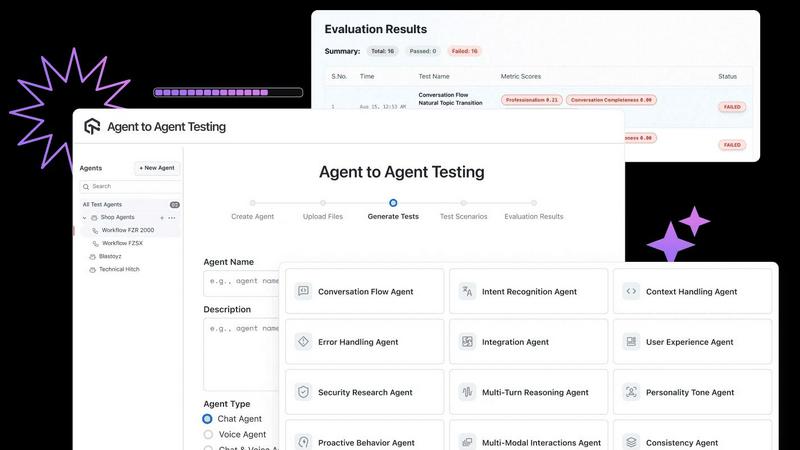
Agent to Agent Testing Platform
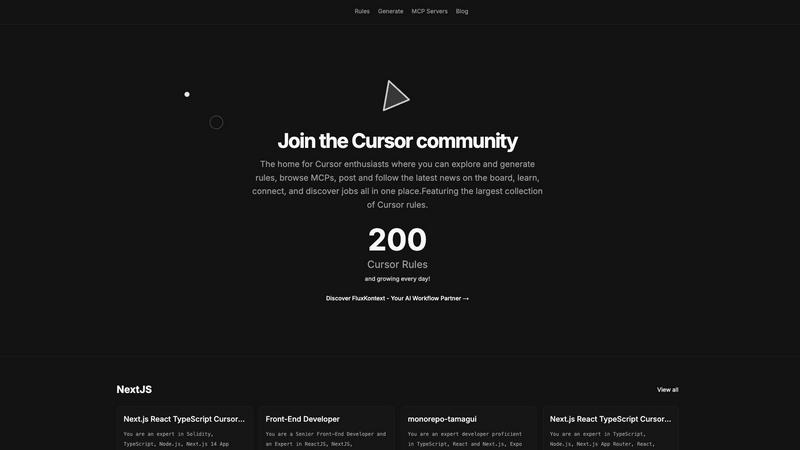
Pro Cursor Rules
Feature Comparison
Agent to Agent Testing Platform
Automated Scenario Generation
The platform features automated scenario generation that creates a diverse array of test cases for AI agents. This capability simulates interactions across chat, voice, hybrid, or phone caller scenarios, ensuring comprehensive coverage of potential user experiences.
True Multi-Modal Understanding
Agent to Agent Testing goes beyond mere text interactions. Users can define detailed requirements or upload various types of inputs, including images, audio, and video. This allows the platform to assess an AI agent’s responses in scenarios that closely mirror real-world conditions.
Diverse Persona Testing
Utilizing a variety of personas, the platform simulates different end-user behaviors and needs during testing. This ensures that AI agents perform effectively across diverse user types, including international callers and digital novices, enhancing their adaptability and effectiveness.
Regression Testing with Risk Scoring
The platform provides end-to-end regression testing capabilities that include insights into risk scoring. This feature highlights potential areas of concern within the AI agent's performance, allowing for prioritization of critical issues and optimization of testing efforts.
Pro Cursor Rules
Curated Enterprise Rule Repository
The platform hosts the largest centralized collection of expert-vetted Cursor Rules, covering leading frameworks and technologies like Next.js 14 App Router, React, TypeScript, Supabase, and Tailwind CSS. Each rule is a comprehensive set of AI instructions that encapsulate senior-level expertise, ensuring generated code adheres to modern best practices, security standards, and optimal architectural patterns right from the first prompt, eliminating guesswork and inconsistency.
AI-Powered Rule Generation Engine
Beyond browsing, the platform provides intelligent tools to generate custom, project-specific Cursor Rules. This feature allows teams to codify their unique internal standards, proprietary patterns, and company-specific architectural decisions directly into their AI workflow, ensuring the assistant acts as a true extension of the team's knowledge base and enforcing governance automatically across all developers.
Integrated MCP Server Hub
Pro Cursor Rules extends functionality by providing access to and information about Model Context Protocol (MCP) servers. This integration allows developers to seamlessly connect their Cursor editor to external data sources, tools, and APIs, transforming the AI assistant into a central command center that can interact with databases, design systems, and internal documentation, thereby unlocking advanced, context-rich development capabilities.
Collaborative Community & Knowledge Sharing
The platform is built around a vibrant community hub where developers and teams can share, rate, and discuss rules. This social layer accelerates collective learning, allows teams to discover and adopt industry-proven patterns quickly, and provides a channel for news, networking, and professional opportunities, fostering an ecosystem of continuous improvement and shared expertise.
Use Cases
Agent to Agent Testing Platform
Quality Assurance for Chatbots
Enterprises can leverage the platform to rigorously test chatbots before they go live. By simulating various user interactions, organizations can ensure their chatbots handle queries accurately and effectively, reducing the risk of customer dissatisfaction.
Voice Assistant Validation
The platform is instrumental in validating voice assistants' performance. It assesses how these AI agents respond to spoken commands and questions, ensuring they maintain high accuracy and professionalism in real-world applications.
Multimodal Experience Testing
Organizations developing AI solutions that integrate multiple input types can use the platform to test these multimodal experiences. This ensures that the AI agents provide consistent and relevant responses regardless of the input format, enhancing user engagement.
Compliance and Risk Management
With built-in validation features, the platform aids businesses in ensuring compliance with regulatory standards. By identifying potential policy violations and risk factors, enterprises can mitigate legal and operational risks associated with AI deployments.
Pro Cursor Rules
Standardizing Output Across Engineering Teams
Engineering leaders can deploy a standardized set of curated rules for their primary tech stack (e.g., Next.js, TypeScript, Tailwind) to ensure every developer, regardless of seniority, produces code that follows identical patterns, naming conventions, and architectural guidelines. This directly reduces code review burden by up to 40% and creates a consistent, maintainable codebase, crucial for scaling teams and long-term project health.
Accelerating New Developer Onboarding
Instead of weeks of manual mentorship and documentation review, new hires can be equipped with the team's specific Cursor Rules on day one. This instantly aligns them with the project's standards and patterns, allowing them to contribute production-ready code immediately. This use case dramatically shortens the onboarding ramp-up time, translating to faster time-to-productivity and significant cost savings.
Enforcing Architectural Governance & Best Practices
For organizations committed to specific architectural decisions (like using App Router, Shadcn UI, or a particular state management solution), rules act as an enforceable policy layer. The AI assistant will guide developers toward the approved tools and patterns while steering them away from anti-patterns, ensuring architectural integrity and reducing technical debt from the outset of every new feature or module.
Rapid Prototyping and Boilerplate Generation
Development teams can leverage technology-specific rules to generate entire feature scaffolds, configuration files, and complex component logic with expert-level structure in seconds. This eliminates the repetitive, low-value work of setting up projects, configuring libraries like Supabase or Stripe, or writing boilerplate code, allowing developers to focus their intellectual effort on solving unique business logic problems.
Overview
About Agent to Agent Testing Platform
Agent to Agent Testing Platform is an innovative AI-native quality assurance framework aimed at validating the behavior of AI agents in real-world environments. As AI systems become increasingly autonomous, traditional quality assurance methods fail to capture the dynamic interactions and unpredictability of these agents. This platform transcends conventional testing by facilitating comprehensive evaluations of multi-turn conversations across various modalities, including chat, voice, and phone interactions. Its primary user base includes enterprises looking to ensure the reliability and effectiveness of their AI agents before they are deployed in production. The platform's value proposition lies in its ability to uncover long-tail failures and edge cases, offering a robust testing environment that guarantees high performance while addressing critical metrics such as bias, toxicity, and hallucination.
About Pro Cursor Rules
Pro Cursor Rules is the definitive enterprise-grade platform and community hub engineered for development teams and engineering leaders who leverage the Cursor AI code editor. It addresses a critical gap in AI-assisted development by transforming the generic AI pair programmer into a specialized, context-aware team member aligned with your specific technology stack and architectural standards. The platform's core is a vast, curated, and shareable repository of "Cursor Rules"—pre-configured AI agent instructions that codify coding standards, framework-specific best practices, and architectural patterns for technologies like Next.js, React, TypeScript, Supabase, Tailwind CSS, and beyond. This centralized knowledge base serves as a collaborative ecosystem, enabling teams to standardize output, enforce governance, and dramatically accelerate onboarding and development velocity. For engineering leadership, the value proposition is clear and measurable: a direct ROI through significant reductions in boilerplate coding, minimized code review cycles, enforced consistency, and the elimination of costly context-switching. Pro Cursor Rules is not merely a tool; it is a strategic asset for systematically harnessing AI to improve software quality, team efficiency, and predictable delivery at scale.
Frequently Asked Questions
Agent to Agent Testing Platform FAQ
What types of AI agents can be tested using this platform?
The Agent to Agent Testing Platform can test various types of AI agents, including chatbots, voice assistants, and phone caller agents, across multiple interaction scenarios.
How does the platform ensure comprehensive coverage in testing?
The platform employs automated scenario generation to create diverse test cases, simulating a wide range of interactions that an AI agent may encounter in real-world environments.
Can I customize test scenarios for my AI agents?
Yes, users can access a library of pre-defined scenarios or create custom scenarios tailored to their specific needs, allowing for thorough evaluation of AI behavior.
What metrics can be evaluated during the testing process?
The platform evaluates critical metrics such as bias, toxicity, hallucinations, effectiveness, empathy, and professionalism, providing insights that enhance the overall performance of AI agents.
Pro Cursor Rules FAQ
What exactly is a "Cursor Rule"?
A Cursor Rule is a detailed set of instructions and context provided to the Cursor AI editor's underlying language model. It defines your preferred coding standards, architectural patterns, technology choices, and stylistic preferences. Think of it as a specialized "persona" or guide that transforms the general-purpose AI into a senior developer expert in your specific stack, ensuring every code suggestion and generation aligns perfectly with your team's requirements.
How does Pro Cursor Rules ensure the quality of its shared rules?
The platform operates on a community-driven model with curation. Rules are often created and shared by experienced developers and industry experts. Users can browse, try, and rate rules, with the most effective and popular ones rising to prominence. This social proof mechanism, combined with the platform's focus on enterprise-grade content, creates a repository where quality is continuously validated and improved by the community itself.
Can I create and use private rules for my company?
Yes, a core value proposition of Pro Cursor Rules is the ability to generate and manage custom, private rules. This allows your engineering team to codify proprietary patterns, internal APIs, and company-mandated security or style guidelines into your AI workflow. These private rules ensure your competitive advantages and internal knowledge remain secure while still leveraging the platform's generation and management tools.
Do I need to be an expert to use or create rules?
Not at all. While creating highly sophisticated rules benefits from deep expertise, the platform is designed to be accessible. Developers can immediately browse and apply existing rules from the vast public library with a single click. Furthermore, the rule generation tools guide users in structuring their instructions, making it straightforward for team leads to encapsulate their key standards without needing to be prompt engineering experts.
Alternatives
Agent to Agent Testing Platform Alternatives
The Agent to Agent Testing Platform is an innovative AI-native quality assurance framework that ensures the reliability and compliance of AI agents across various communication channels, including chat, voice, and multimodal systems. This platform is essential for enterprises looking to validate AI behavior in real-world scenarios, particularly as these systems become increasingly autonomous and complex. Users often seek alternatives due to factors such as pricing, specific feature sets, or the need for a platform that better aligns with their organizational requirements. When evaluating alternatives, it is crucial to consider aspects like scalability, the ability to simulate real-world interactions, traceability, and the comprehensiveness of testing capabilities, as these factors can significantly impact the effectiveness of AI agent validation.
Pro Cursor Rules Alternatives
Pro Cursor Rules is the definitive enterprise platform for developers and engineering teams using the Cursor AI code editor. It functions as a centralized hub for sharing and discovering AI-powered rules, which are pre-configured instructions that transform the AI assistant into a specialized, context-aware team member. This category focuses on maximizing developer productivity, enforcing code consistency, and accelerating development velocity through structured AI guidance. Users may explore alternatives for various strategic reasons. Common drivers include budget constraints, specific feature requirements not met by the core offering, or a need for a different deployment model. Some teams might seek solutions with a different focus, such as more granular integration capabilities or alternative community-driven approaches to rule curation and sharing. When evaluating alternatives, key considerations should align with core business objectives. Prioritize solutions that demonstrably improve team efficiency and code quality. Assess the depth and relevance of the rule library to your tech stack, the flexibility for customization, and the platform's ability to scale with your team. The ultimate goal is to secure a measurable return on investment through reduced boilerplate, faster onboarding, and enforced architectural governance.